Home / All / Distributor Growth / Why Choose a Brand With Local Stock When Doing Bathroom Fixture Business in Africa?
Why Choose a Brand With Local Stock When Doing Bathroom Fixture Business in Africa?
Oct 16,2026
Distributor Growth · Sourcing Strategy
Why Choose a Brand With Local Stock When Doing Bathroom Fixture Business in Africa?
Anyone who has run a bathroom-fixture wholesale business knows the feeling: the goods are on the water and your stomach is in your throat. Order to arrival runs 45 to 90 days as a matter of routine. If the market turns while the ship is turning, the container lands at a loss. And when a customer chases an order, all you can do is wait.
That is why more wholesalers now make one question the first test of any brand they take on: is the stock already in the country? Local stock settles three things at once — your money turns faster, after-sales stops being a phone call to a factory, and customers believe what they can see on your shelf.
The rest of this article puts numbers behind that instinct. It sets out what a direct container order really costs once freight, clearance, currency and waiting are added up, where the margin leaks, what in-country stock changes, and how to tell a real warehouse from a good sentence in an email. It does not argue that importing direct is wrong — on proven volume it is genuinely cheaper.
Figures come from published freight references, port and customs data and central-bank exchange rates. Where a number is a market range rather than a fixed tariff, it is shown as a range.
Cost Structure
What a Container Order Really Costs
Most first-time importers compare one number: the freight rate. That is the smallest part of what leaves your bank account. A direct order stacks these layers on top of the factory price.
Cost layer
What it is in practice
What it does to your plan
Ocean freight
Roughly USD 125–195 per CBM by LCL on the main African lanes; a 20ft FCL runs about USD 2,100–4,800 port-to-port
Sets the floor — and it is the only number most buyers compare
Destination charges
Terminal handling, container freight station unpacking, documentation
The reason an LCL quote usually loses to FCL once you pass roughly 13–15 CBM
Duty and taxes
HS-code dependent, different in every market, sometimes revised mid-year
Must be funded before release — not after you have sold anything
Clearing and permits
Broker fees, permits, pre-arrival assessment
Mistakes here create demurrage, and demurrage is charged whether or not the delay was your fault
Waiting costs
Financing, storage, demurrage and currency drift while cargo is unsellable
Appears on no quotation, and often exceeds the freight itself
Freight ranges are 2026 published reference levels from China–Africa forwarders and are indicative only. Re-confirm every rate at booking.
Cash Conversion
The Most Expensive Line in the Deal Is the Waiting
Published port-to-port transit times on the China–Africa lanes run roughly: Mombasa 22–30 days, Durban 24–32, Dar es Salaam 24–32, Tema 28–38, Dakar 27–37 and Lagos 35–45, with forwarders advising extra time for Apapa congestion. Booking cut-offs are typically five to seven days before sailing, and door-to-door adds three to seven more days for clearance and inland delivery.
Add the days you spend deciding, the days your bank takes and the days the terminal takes, and a direct order realistically sits between six and ten weeks from payment to sellable shelf stock on the faster lanes — and comfortably past three months where clearance is slow. Through all of it the goods are already yours, the cash is already spent, and nothing is earning.
Put a number on the wait
Working-capital and inventory finance is expensive in these markets. Nigerian microfinance facilities for stock are commonly priced at roughly 24–42% a year; in Kenya, commercial bank SME lending sits near 14% on top of a central bank rate around 8.75%, with microfinance at 18–36%. At 30% a year, ten weeks of dead time costs roughly 5–6% of the value of that stock — before a single unit of margin and before any port charge.
Currency moves on top of that. Between the end of December 2025 and early October 2026 the Ghanaian cedi lost about 7.4% against the dollar, the Ugandan shilling about 10% and the Tanzanian shilling about 6.8%, while the Kenyan shilling was close to flat. On a direct order your cost is fixed in dollars weeks before you sell in local currency — which is precisely how a container lands at a loss: the price the market will bear has moved by the time the goods clear. Buying from stock already inside the country shrinks that gap to nearly nothing.
A 2026 study of the South African market put the same point in one sentence: where import lead times run six to fourteen weeks and project timelines are unpredictable, the ability to hold the right stock in the right place is a real competitive advantage — and distribution is consolidating toward the merchants and specialised distributors who can do exactly that.
Port Reality
Where a Direct Import Leaks Margin
None of the following appears in a freight quotation, and all of it is charged to the importer.
Demurrage and port storage. At Mombasa the free period is typically five to fourteen days. After that, standard rates run about USD 25–50 per container per day, escalating to USD 75–150 past the first week, so a 20ft box ten days over can accumulate USD 600–900. Port storage is charged by the authority in parallel — you can pay both at once.
Empty container backlog. Industry bodies put roughly 167,000 boxes due back at Mombasa depots since September 2025, with five depots running near or above capacity. Truck detention on a five-day return cycle has been estimated at around USD 16 million. Manufacturers describe the outcome plainly: higher landed costs and working-capital pressure from delayed container returns.
Documents that must exist before the vessel sails. Nigeria requires a Form M and a Pre-Arrival Assessment Report raised through your bank and broker in advance. Cargo that arrives without a PAAR waits in the terminal and accrues storage from day one, at your cost.
None of this is within your control, and none of it can be priced in advance. It is simply risk you take on personally with every direct order.
The Comparison
In-Country Stock vs a Container: What Actually Changes
These are the differences dealers feel within a season. Only one of them is about price.
Decision point
Direct container order
In-country stock
Cash cycle
Six to ten weeks between payment and first sale
Bought and sold inside the same trading month
Order size
Fill 13–15 CBM or pay LCL destination charges that punish small volumes
Buy what the shelf actually needs
Currency
Cost locked in dollars before you know your selling price
Priced close to the sale, in the currency you sell in
Port risk
Demurrage, storage and clearance errors are yours
Already cleared, landed and counted
Wrong bets
One slow model ties up a container for a season
A slow line is one small top-up you simply do not repeat
Stock held in the country is delivered in days, not after the next vessel berths.
Velocity beats unit cost: a 25% margin turned six times a year puts more cash through the business than a 40% margin turned twice — and the second option also carries every port and currency risk above.
The Three Tests
Turnover, After-Sales, Trust: What the Shelf Actually Buys You
Wholesalers rarely put it in these words, but the three things local stock fixes are always the same three.
Turnover. Order this week, ship this week. The same working capital goes round several more times a year, and on the same money the difference in what you earn is not a few percent — it is a different order of magnitude. No freight quote ever shows this line, which is why it is usually missed.
After-sales. A mixer that drips or a shower set missing a hose is a this-week problem, not a next-vessel problem. A local team answers the same day and pulls the spare from local stock, instead of leaving your customer parked in "waiting for the factory".
Trust. When a customer walks in and sees real stock, branded packaging and a model code they can trace back to the range, they will pay a little more for the assurance. You stop having to win every order on price alone.
All three arrive together from the same decision. That is the whole argument for choosing a brand that already holds stock where you sell.
Due Diligence
How to Verify a "Local Stock" Claim
"We have stock in Africa" has become a standard sentence in supplier emails, and it means anything from a rented pallet to a working warehouse. Four questions sort it out before you commit.
1Ask for a dated stock list. Not a catalogue — what is physically in the country now, with quantities. A supplier who holds stock can produce this the same day.
2Ask whether wear parts are stocked. Cartridges, aerators, hoses and spray heads are what bring customers back. Finished goods alone are half an answer.
3Ask the replenishment cadence. How often is the warehouse topped up, and what happens the week a fast line sells out? "We can ship from China" is not local stock.
4Ask who carries the risk, and how a damaged unit is handled. Who funds the duty, the currency exposure and the slow models before you buy — and is a faulty unit replaced in-country or shipped back at your cost?
If any answer comes back vague, treat the offer as a China-direct shipment with friendlier wording.
Honest Limits
When Direct Import Still Wins
This would not be worth reading if local stock solved everything. It does not.
Direct import is still the right call when the volume is already proven: a confirmed project, a line you have sold for two seasons, or a catalogue depth no warehouse would carry. On those lines a full container genuinely beats any local price, and it should.
Local stock is not a repair kit for a badly chosen range, weak credit control or poor installation on site. It fixes time, risk and flexibility — three large things, but not everything.
Be clear-eyed about the trade as well. Stock held in your country costs more per unit than the same item ex-factory. You are not buying a discount; you are buying days instead of weeks, the option to buy small, and far less variance in what a shipment finally costs you. Most distributors end up running both: containers for the proven winners, in-country stock for gaps, spares, new lines and anything a customer needs this week.
OYAQUA
What OYAQUA Holds In-Country
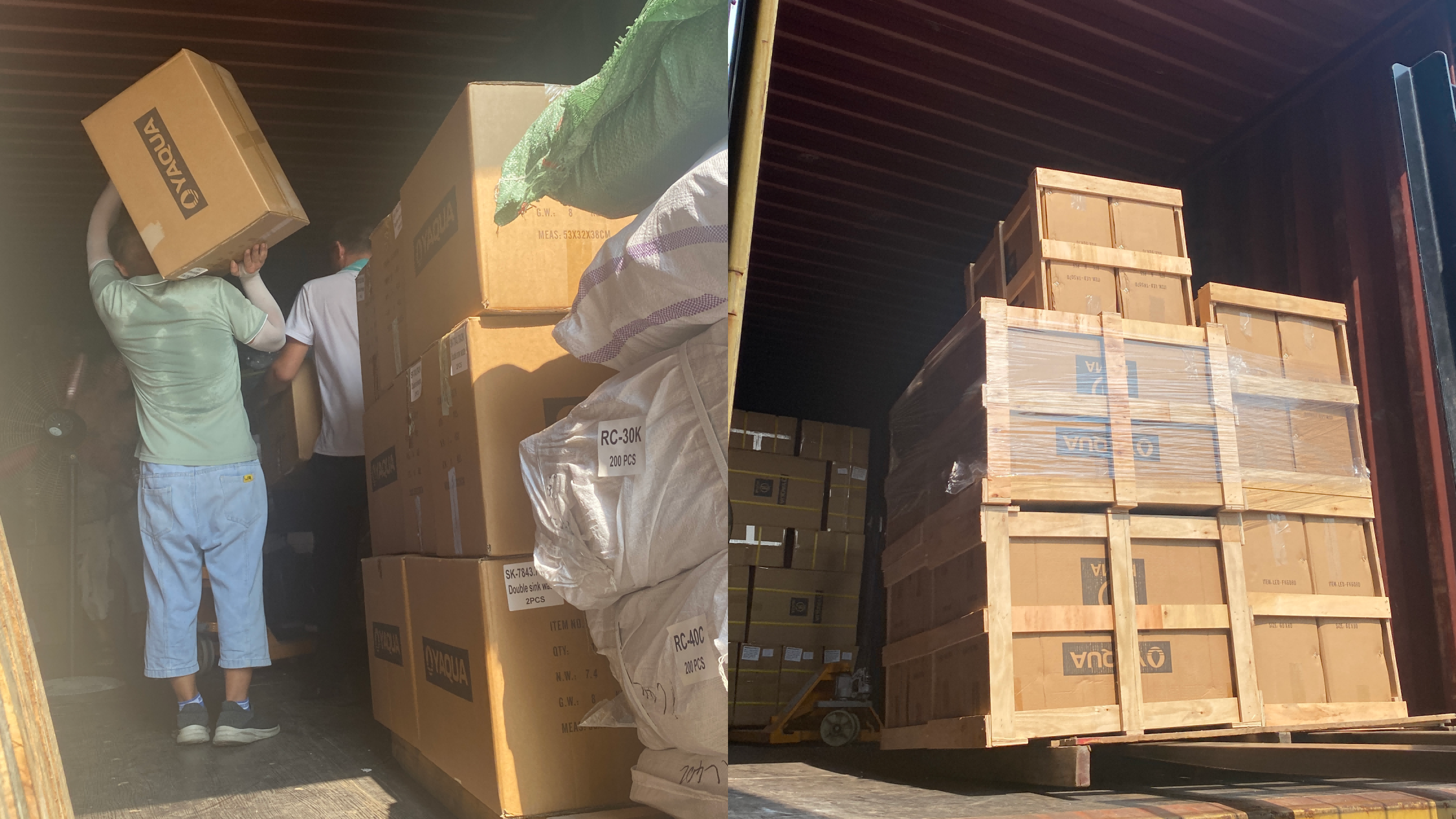
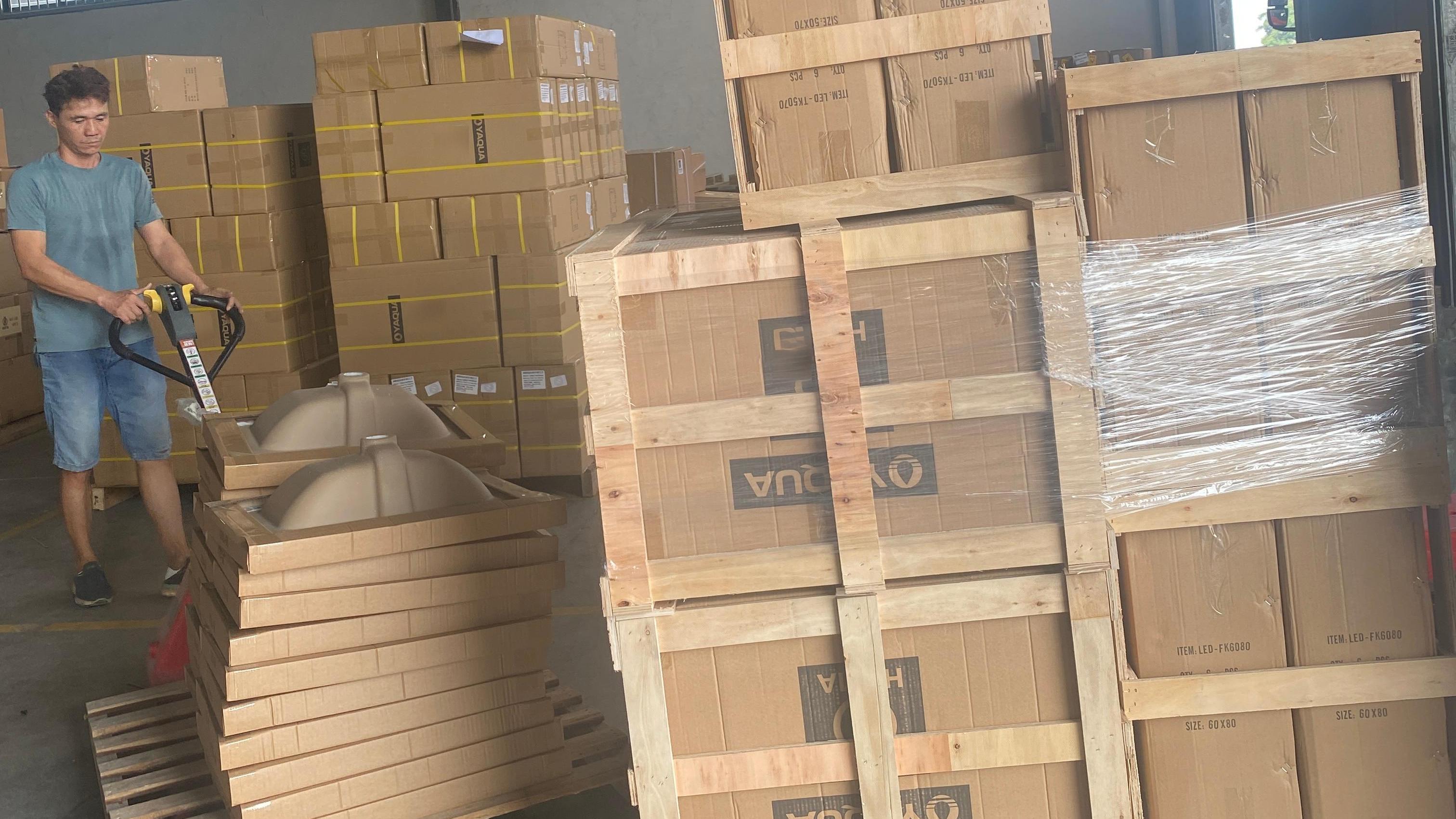
OYAQUA runs seven local warehouses with local sales teams — Kenya, Tanzania, Uganda, Nigeria, Senegal, Zimbabwe and Guinea — and tells partners which lines are held where before they order. Coverage shifts as lanes open and demand moves, so the practical step is to ask what is currently held for your market rather than assuming a fixed list.
For countries without a local warehouse, orders ship straight from stock in China and are tracked from packing to arrival, so you still know where the goods are and when they will land. Either way you are not guessing.
What sits in those warehouses is deliberately not the whole catalogue. It is the fast-moving part of it: basin and kitchen mixers and shower sets — the models a hardware store actually turns over — together with the wear parts that keep them working. Deep catalogue items, project-specific configurations and full-range orders still move by container on a normal production and shipping cycle.
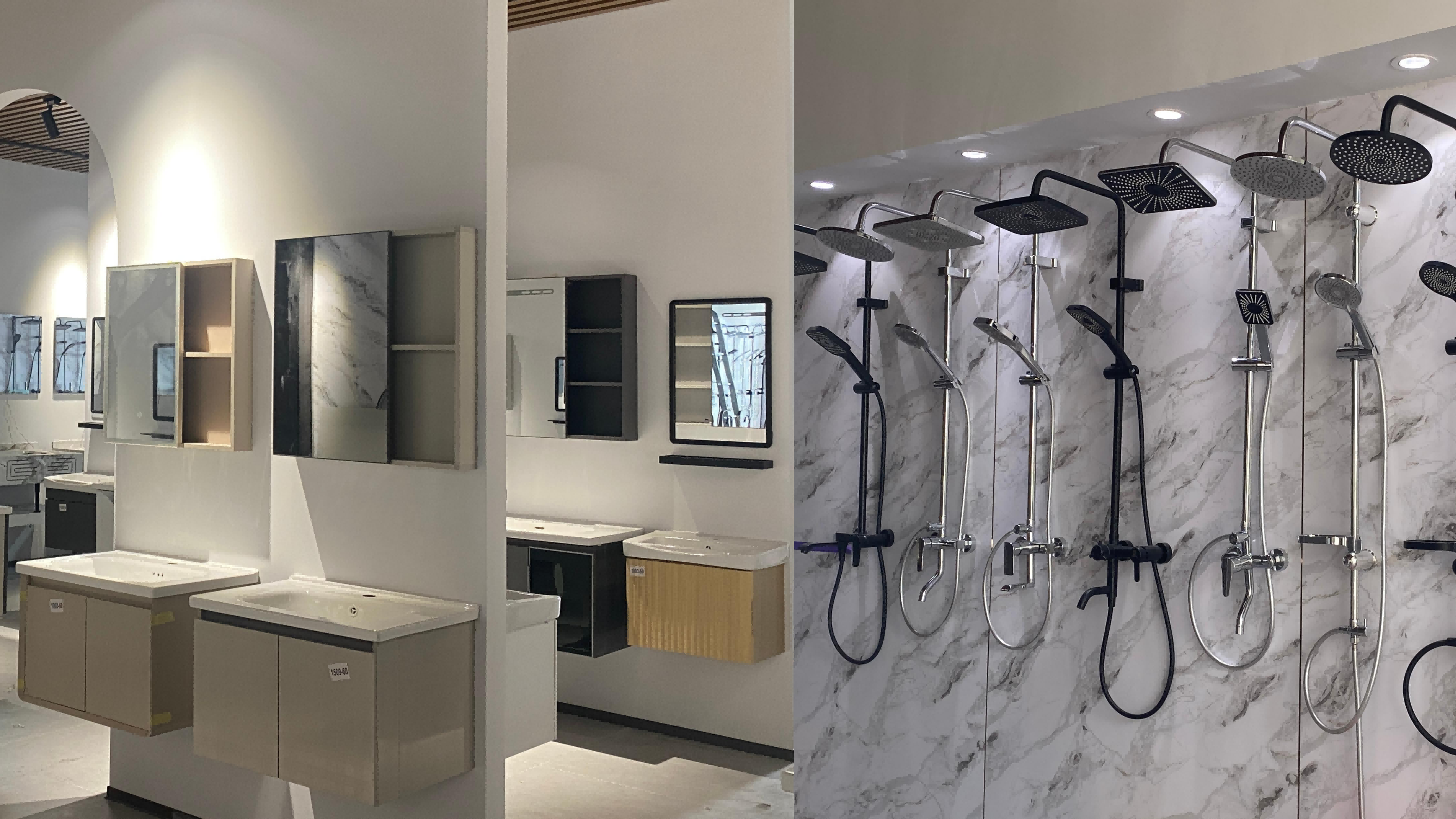
Stock is held as fast-moving mixers and shower sets plus the spares that keep them working.Partners get display kits too, so local stock is something customers can see and touch.
The stock is one part of the arrangement. Partners also get starter packs, samples, catalogues and retail display kits, protected territories and protected margins, co-marketing, and training that helps a team sell branded goods as a repeat line rather than a one-off order — plus local people who answer in your time zone instead of waiting for a factory inbox to open.
The biggest cost of switching supplier is not money. It is habit: the catalogue your staff already know, the price lists already printed, the customers who trust the box they are used to. That is a genuine cost and it should not be waved away.
But run the arithmetic once. Same capital, same customers, same shelves — and the goods move from "on the water" to "in the country". Turnover, after-sales and trust all improve at the same time, and none of them depends on winning a price war. Most wholesalers who do that calculation once do not go back to it.
What makes the change survivable is what stands behind the stock: territory protection, so your margin is not undercut by the shop across the road, and training, so your team can sell a branded line as a long-term business. Stock wins the first order; those two are what turn it into a repeat one.
FAQ
Frequently Asked Questions
Is in-country stock always more expensive per unit? Usually, by some margin — and that is the point. Someone has already paid the freight, duty, clearance and storage and has been holding the goods on your behalf. The comparison is not unit cost against unit cost; it is unit cost plus six to ten weeks of dead capital plus port risk, against a slightly higher unit cost with none of that.
Doesn't the higher unit cost eat my margin? It lowers the percentage and usually raises the annual cash. Margin per unit matters less than margin multiplied by turns, and local stock turns faster because you can reorder in small amounts instead of waiting for the next vessel.
Can I run containers and local top-ups together? Yes, and for most distributors that is the eventual shape. Containers carry the proven, high-volume lines at the best unit cost; in-country stock covers gaps, spares, new lines you are testing and anything a customer needs this week. It is also the strongest position to bid from: for residential project work, "available now" is a materially better answer than "four to six weeks after the vessel berths".
What if my country has no local OYAQUA warehouse? The order ships from stock in China and is tracked from packing to arrival. You still get one accountable contact, a confirmed packing date and a shipment you can follow — rather than silence between booking and berth.
What if the model I need is not in the local warehouse? It goes onto the next replenishment cycle and ships with the container order. Ask your contact for the current replenishment schedule before you promise a customer a date — and treat a line that is never in stock as made-to-order, not stocked.
Recap
Key Takeaways
1. "On the water" is the most expensive state your goods can be in. A 45–90 day order-to-arrival routine, plus clearance and inland delivery, becomes weeks of dead capital — and containers that land at a loss when the market moves mid-voyage.
2. Local stock fixes three things at once: turnover, after-sales and trust. None of them appears on a freight quotation, and all three show up in your annual result.
3. It also moves risk off your balance sheet — port delays, currency drift, minimum container economics and the cost of a wrong bet.
4. Switching brands costs habit, not money. Run the numbers once and most wholesalers do not go back. Direct import still wins on proven volume, so the structure that works is containers for what you have already sold, in-country stock for speed, spares and the unpredictable tail.
OYAQUA runs seven local warehouses with local sales teams and backs partners with starter packs, protected territories, display kits, training and in-country support; markets without a local warehouse ship from China stock with tracking. Coverage changes as lanes open — ask your contact for the current stock list for your market before you plan a season.