Most Popular Bathroom Vanity Styles of 2026 — Africa Edition
Industry Insights · Africa Bathroom Market
Why 2026 Is a Turning Point for Bathroom Vanities in Africa
If you sell or specify bathroom products in Africa, 2026 is the year the vanity stops being a commodity. Across Lagos, Nairobi, Accra, Abidjan and Johannesburg, the basin cabinet has become the most photographed, most compared and most returned item in a mid-range bathroom — and the styles that win are not simply imported from Europe or North America. They are the styles that survive humidity, hard water, voltage fluctuations and long inland freight, while still looking like the bathrooms people see on their phones.
This guide is written for importers, distributors, contractors and hotel procurement teams who need a practical answer to one question: which bathroom vanity styles should be on your 2026 order list for Africa, and why? We combine the latest published trend data from the NKBA and Houzz research programmes with Africa-specific trade and consumption data, then translate both into specific cabinet boards, countertop materials, hardware finishes and compliance steps.
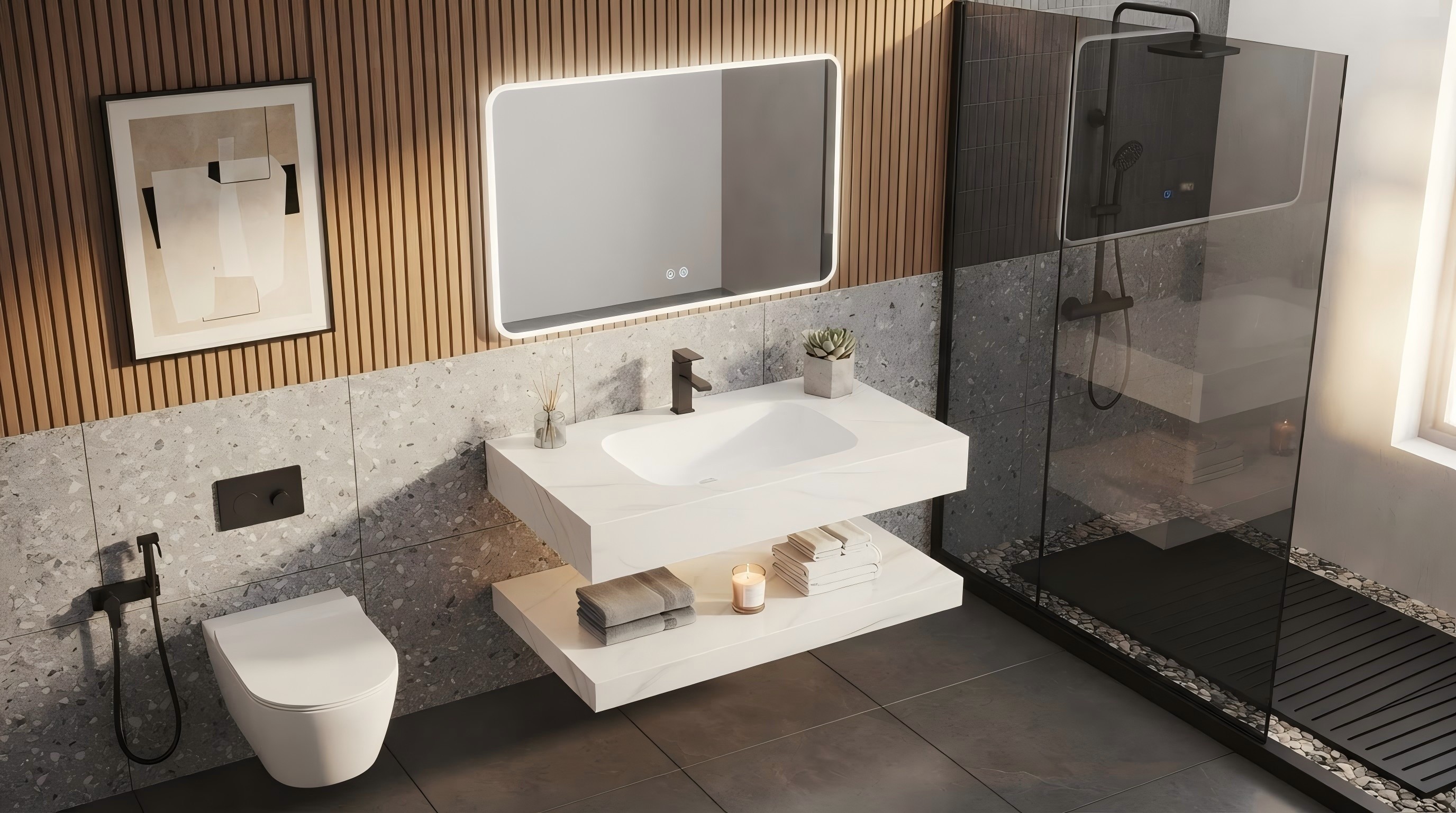
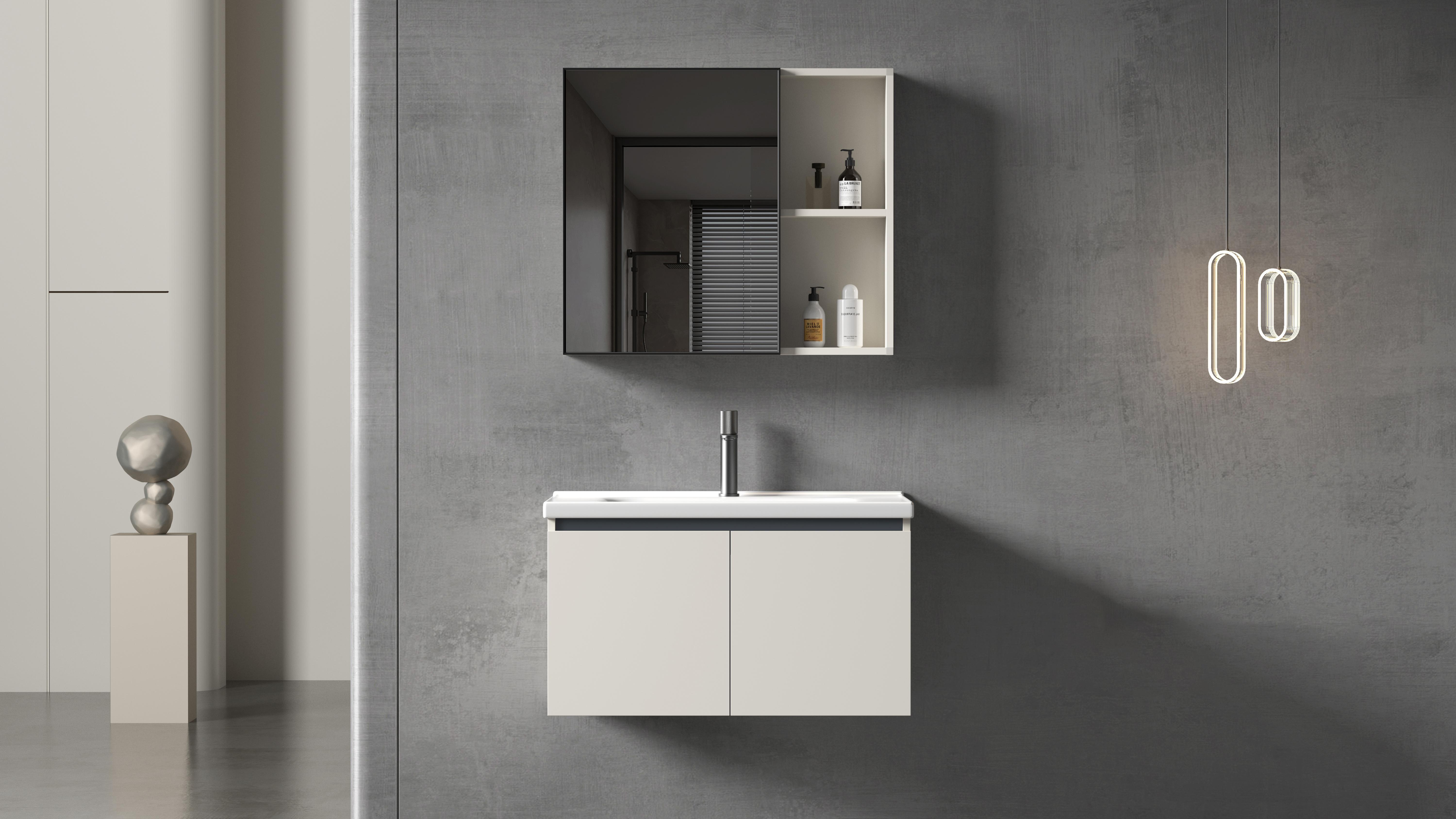
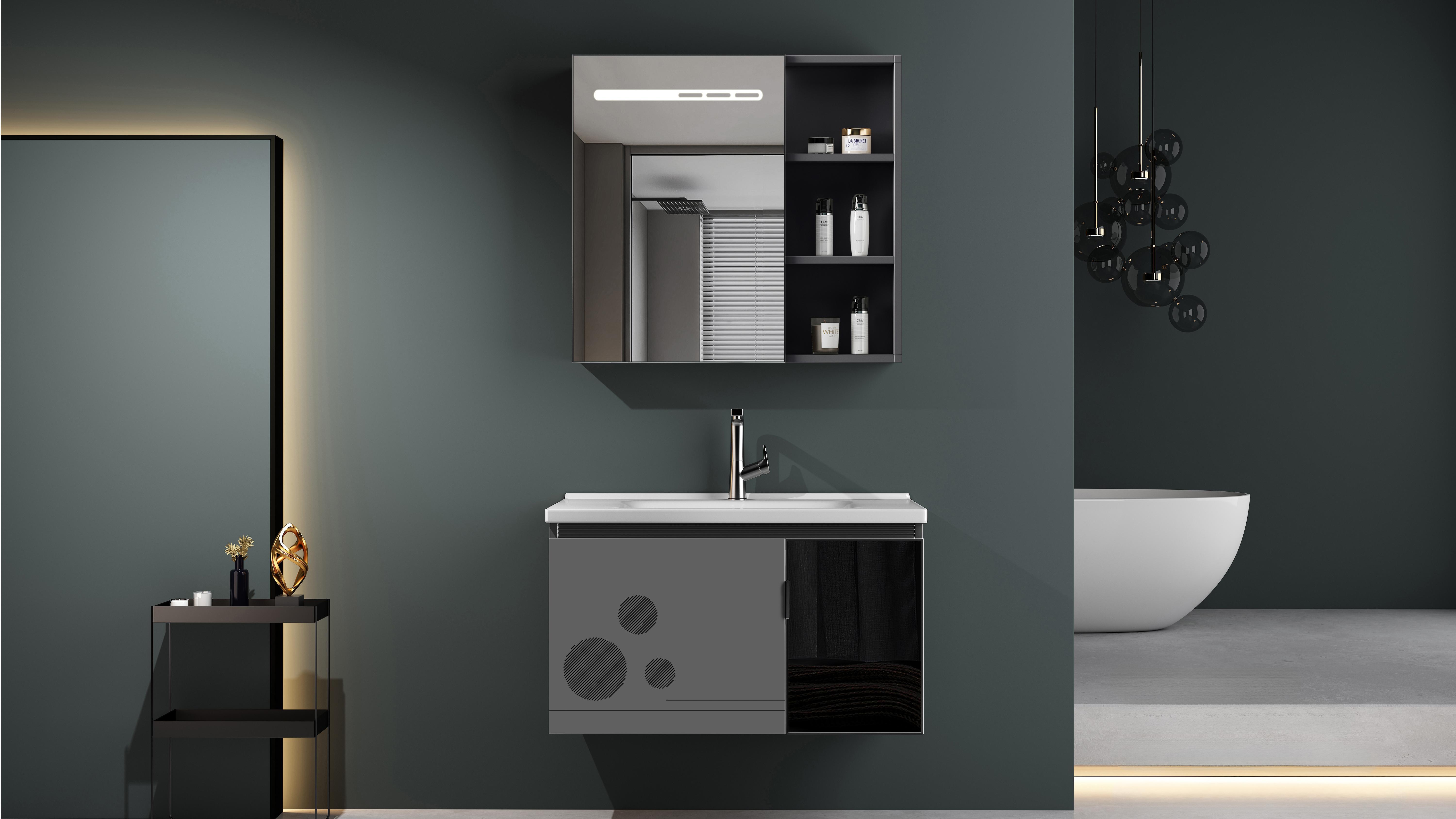
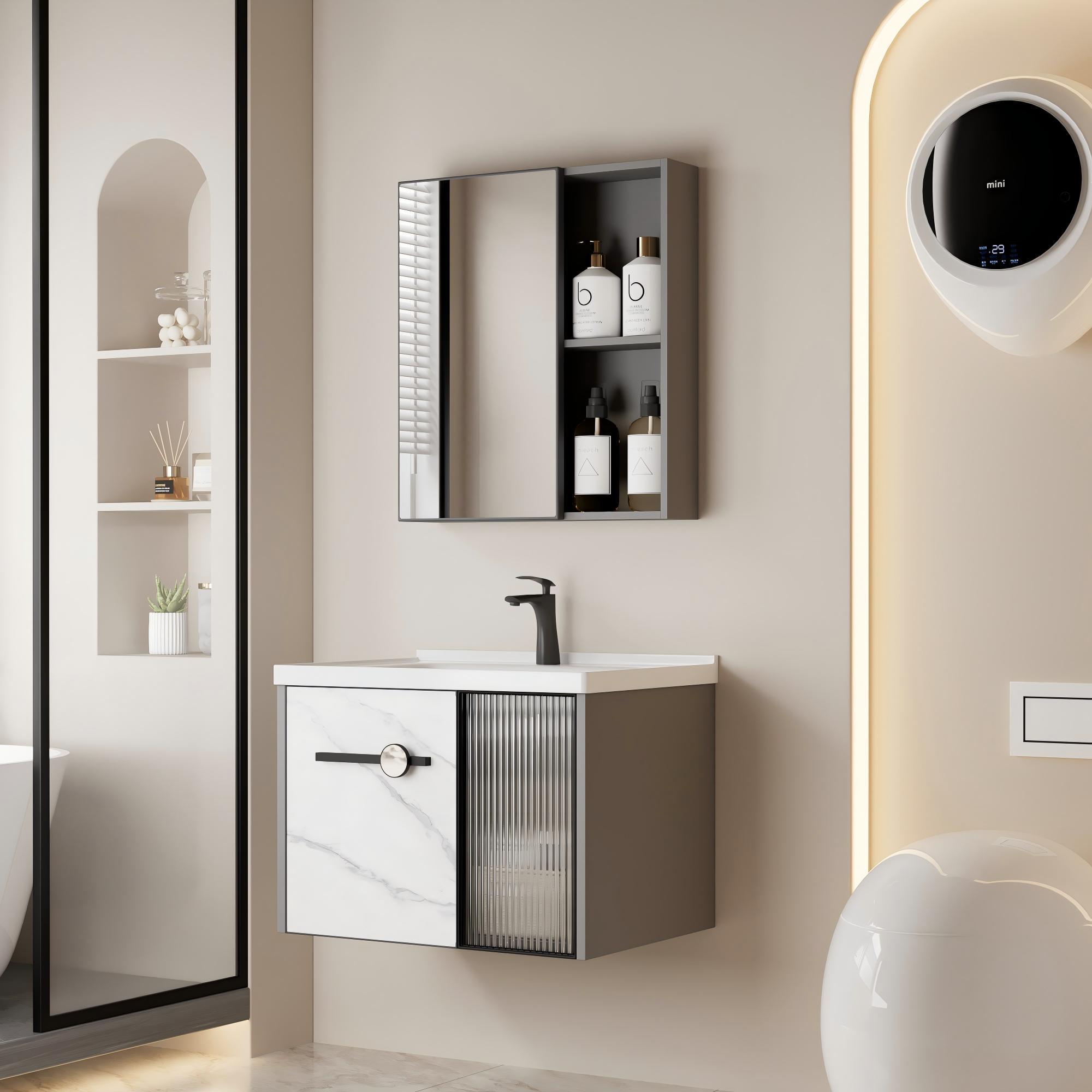
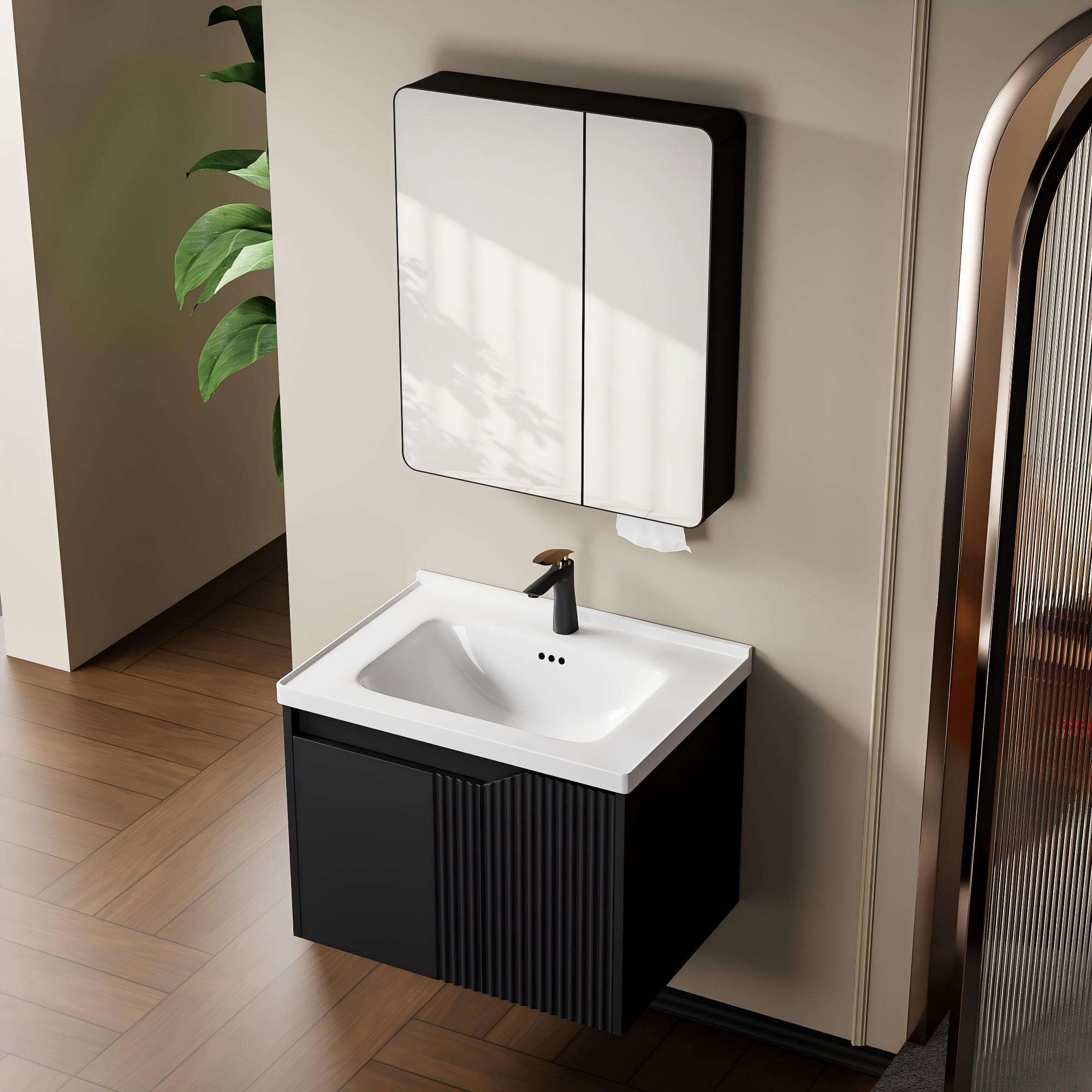
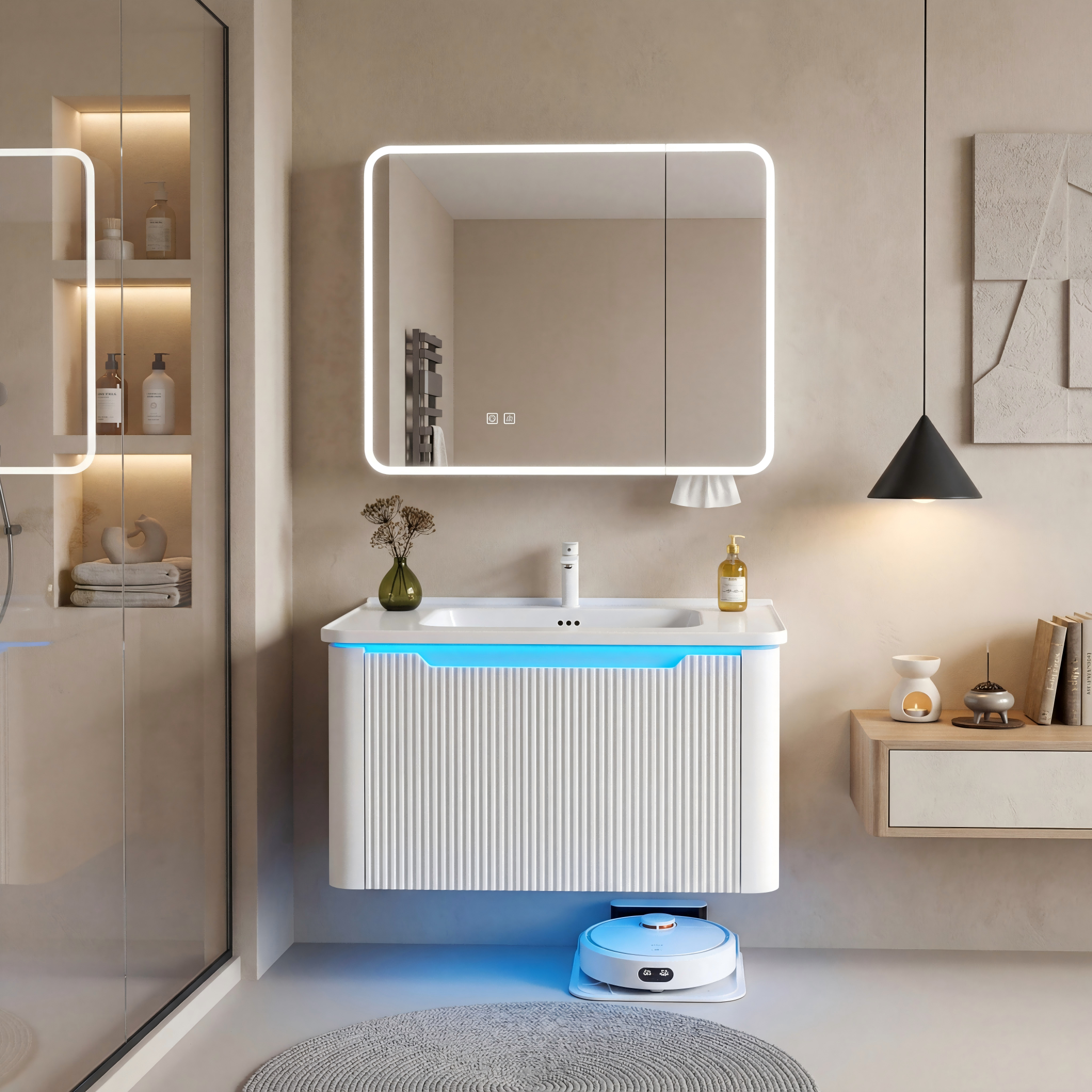
Every product shown in this article is a real unit from the OYAQUA bathroom vanity range manufactured by Jiangmen Muquan Sanitary Ware Co., Ltd., photographed in a finished bathroom setting rather than on a cut-out white background, so you can judge how each style actually reads in a room.
The short answer
For 2026 in Africa, four vanity styles dominate: warm wood-look multi-layer solid wood for design-led residential and hospitality projects, sintered stone (rock slab) top vanities for humid coastal and hard-water regions, high-density board vanities for high-volume mid-market and apartment programmes, and premium finished board vanities for the design-upgrade tier where buyers want a richer surface without a solid-wood price. Neutral colours, soft-close storage, in-cabinet power and moisture-sealed construction are now baseline expectations rather than extras.
What the 2026 Global Trend Data Actually Says
Before regionalising anything, it is worth grounding the range in what the large published studies are reporting. The National Kitchen & Bath Association (NKBA) 2026 Bath Trends Report, built on the views of roughly 700 kitchen and bath industry professionals, and the Houzz U.S. Bathroom Trends Study together describe a market that has decisively moved toward warmth, storage intelligence and spa-like restraint.
- Wood finishes overtake paint. In the NKBA 2026 report, 62% of respondents identified wood-look vanities as a leading style, ahead of painted finishes at 53%.
- Neutrals are near-universal. 96% of professionals named neutral palettes as the most popular bathroom colour direction, led by off-white (58%) and light brown or tan (54%), with white at 40%.
- Hotel and spa styling keeps climbing. Around 77% of respondents expect hotel or resort-inspired bathrooms to grow in popularity — a direct signal for African hospitality pipelines.
- Power inside the cabinet is now expected. Roughly eight in ten professionals report demand for integrated in-cabinet outlets, and Houzz data puts the figure at 29% of renovating homeowners actually installing them.
- Configurable storage wins. About eight in ten professionals report demand for customisable storage modules; Houzz reports 78% choosing soft-close drawers and 75% soft-close doors.
- Bathrooms are getting larger and showers bigger. 72% of NKBA respondents expect larger primary bathrooms; Houzz reports 39% of renovators enlarging the shower and 16% creating a wet room.
- Matte leads metal finishes. Matte finishes lead at 54%, followed by brushed at 51%, satin at 46% and polished at 39% — a useful ranking when specifying hardware for humid climates.
Two of these findings matter more in Africa than they do elsewhere. Wood-look finishes are not just fashionable — a properly sealed multi-layer board or marine-grade substrate is also one of the few finishes that tolerates the humidity swing between a coastal morning and an air-conditioned evening. And the move to larger vanities with integrated power aligns with how African middle-class households actually use the room: shared family bathrooms, grooming appliances, and water-storage realities that make in-cabinet organisation valuable.
Sizing the Opportunity: Africa's Bathroom Products Market
Africa is not a single market, but the direction of travel is consistent across the major demand centres. IndexBox analysis of African sanitary ware consumption reports steel sanitary ware consumption at approximately 116 million units valued at about US$766 million in 2024, projected to reach roughly 133 million units and US$979 million by 2035 — volume growth near 1.3% annually with value growth closer to 2.3%, meaning the market is steadily trading up. Nigeria leads by volume, Egypt leads by value, and Morocco, Algeria and Ghana show the highest per-capita consumption.
The plastic sanitary ware segment is larger still in unit terms, at roughly 265 to 267 million units and US$2.9 to 3.1 billion in 2024, forecast to reach about US$3.7 billion by 2035. Nigeria, Egypt and Ethiopia together account for around 29% of regional volume, while Kenya, Ghana and Morocco show the strongest per-capita figures. Separately, Verified Market Reports sizes the Middle East and Africa sanitary ware market at about US$2.8 billion in 2024 and US$3.0 billion in 2025, on track for roughly US$4.1 billion by 2033 at a compound annual growth rate near 4.8%.
The read-through for vanity buyers is straightforward: unit growth is modest, value growth is faster, and the growth is concentrated in countries where the mid-market is formalising. That combination rewards suppliers who can offer a clear good-better-best ladder rather than a single price point.
| Segment | Latest reported consumption | Projected outlook | Demand concentration |
|---|---|---|---|
| Steel sanitary ware (Africa) | Approx. 116M units / US$766M (2024) | Approx. 133M units / US$979M by 2035 | Nigeria (volume), Egypt (value), Morocco / Algeria / Ghana (per capita) |
| Plastic sanitary ware (Africa) | Approx. 265–267M units / US$2.9–3.1B (2024) | Approx. US$3.7B by 2035 | Nigeria, Egypt, Ethiopia around 29% of volume |
| Sanitary ware (Middle East & Africa) | US$2.8B (2024), US$3.0B (2025) | Approx. US$4.1B by 2033, CAGR approx. 4.8% | Urbanisation, infrastructure spend, growing middle class |
Figures are as published by IndexBox and Verified Market Reports. Treat them as directional market sizing for range planning, not as a substitute for your own customs and sell-through data.
Style 1: Warm Wood-Look Vanities — The New Default
A decade of all-white bathrooms has given way to warmth. The NKBA's 2026 finding that wood finishes now lead painted finishes is visible on the ground in Africa too, particularly in owner-occupied homes, boutique hotels and serviced apartments where the bathroom is part of the marketing photography.
The African caveat is moisture. A wood-look vanity specified for Tema, Lagos, Abidjan, Dakar, Durban or Cape Town needs a substrate and edge treatment that can handle sustained relative humidity and salt-laden air. In practice that means multi-layer solid wood construction with fully sealed edges, a moisture-resistant back panel, and a finished underside — not just a decorative veneer over raw particleboard.
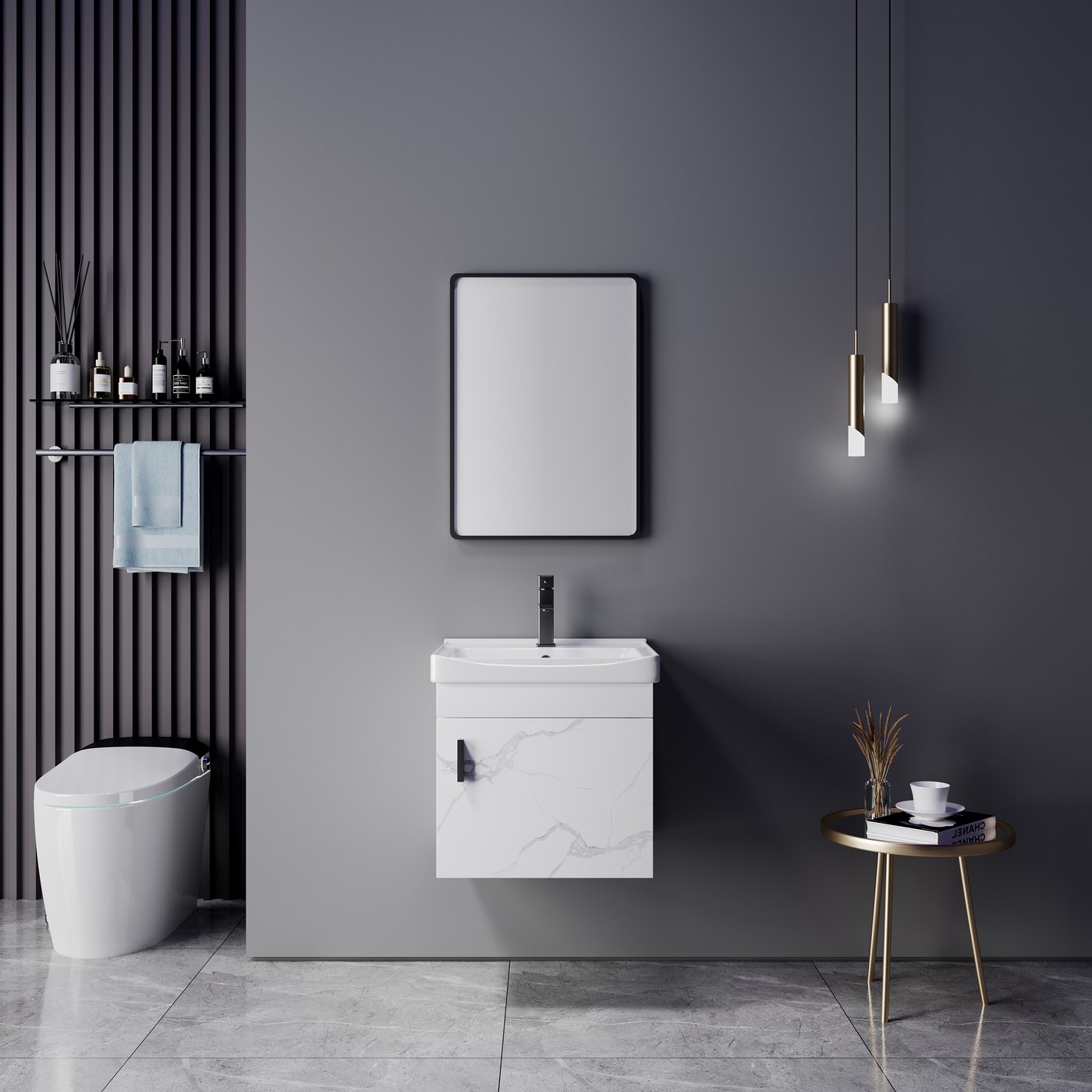
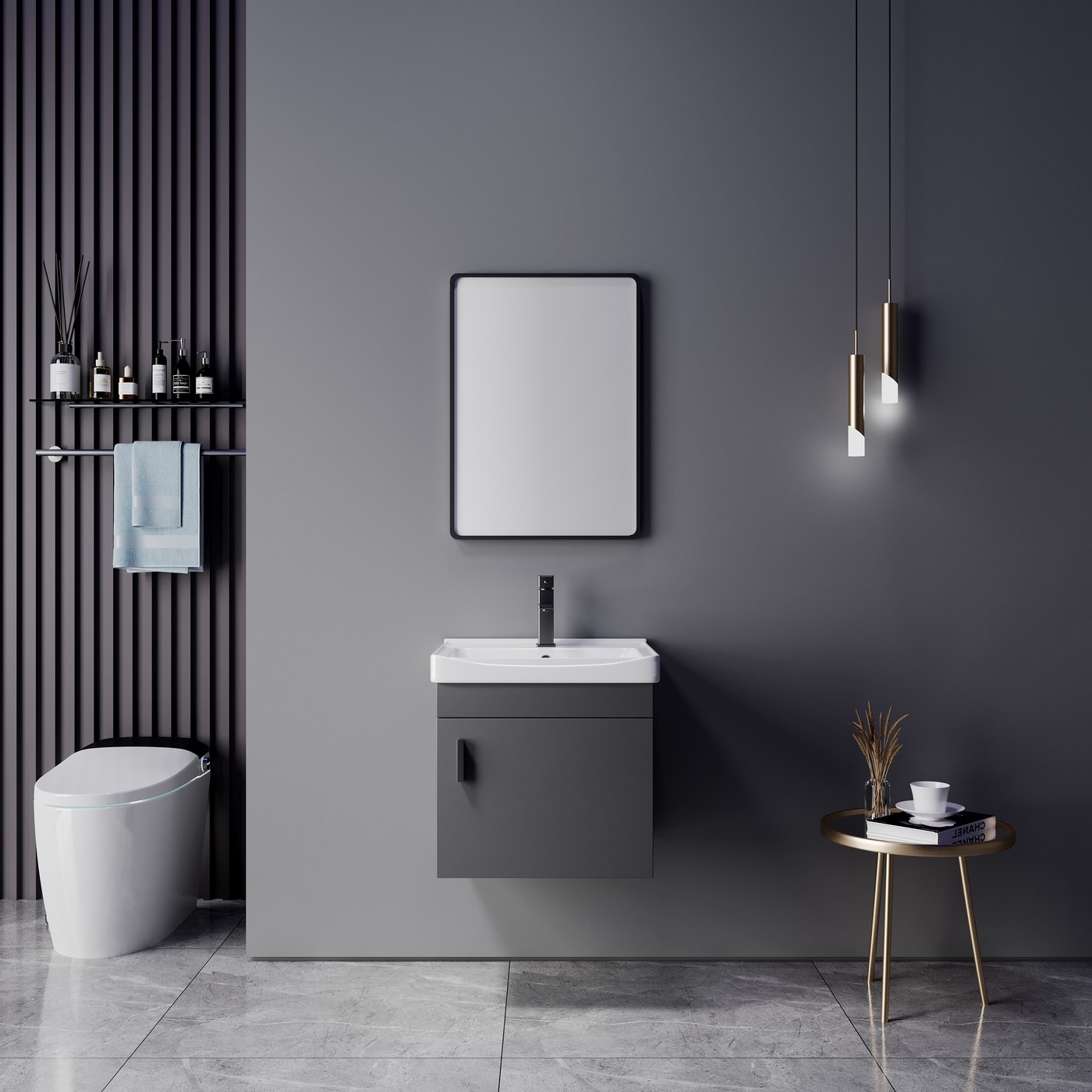
Specify this when: the project is design-led residential or hospitality, the bathroom is mechanically ventilated, and the buyer is willing to pay for a visible wood grain. Pair with matte or brushed hardware rather than polished, which shows water spotting far more quickly.
Style 2: Sintered Stone (Rock Slab) Vanities — Built for Heat, Humidity and Hard Water
Sintered stone, widely called rock slab in the supply chain, has moved from a niche upgrade to the default premium top across the OYAQUA range — and for African conditions it is arguably the most defensible specification available. The material is fired at extreme temperatures into a non-porous slab, which means it does not absorb water, does not swell at the edges, and resists both the staining and the limescale that hard water leaves behind.
That matters because hard water is not a fringe issue in much of the continent. In markets where borehole and municipal supply both carry high mineral content, a painted MDF top begins to fail at the basin cut-out within a couple of years. A sintered stone top with a properly bonded basin does not.
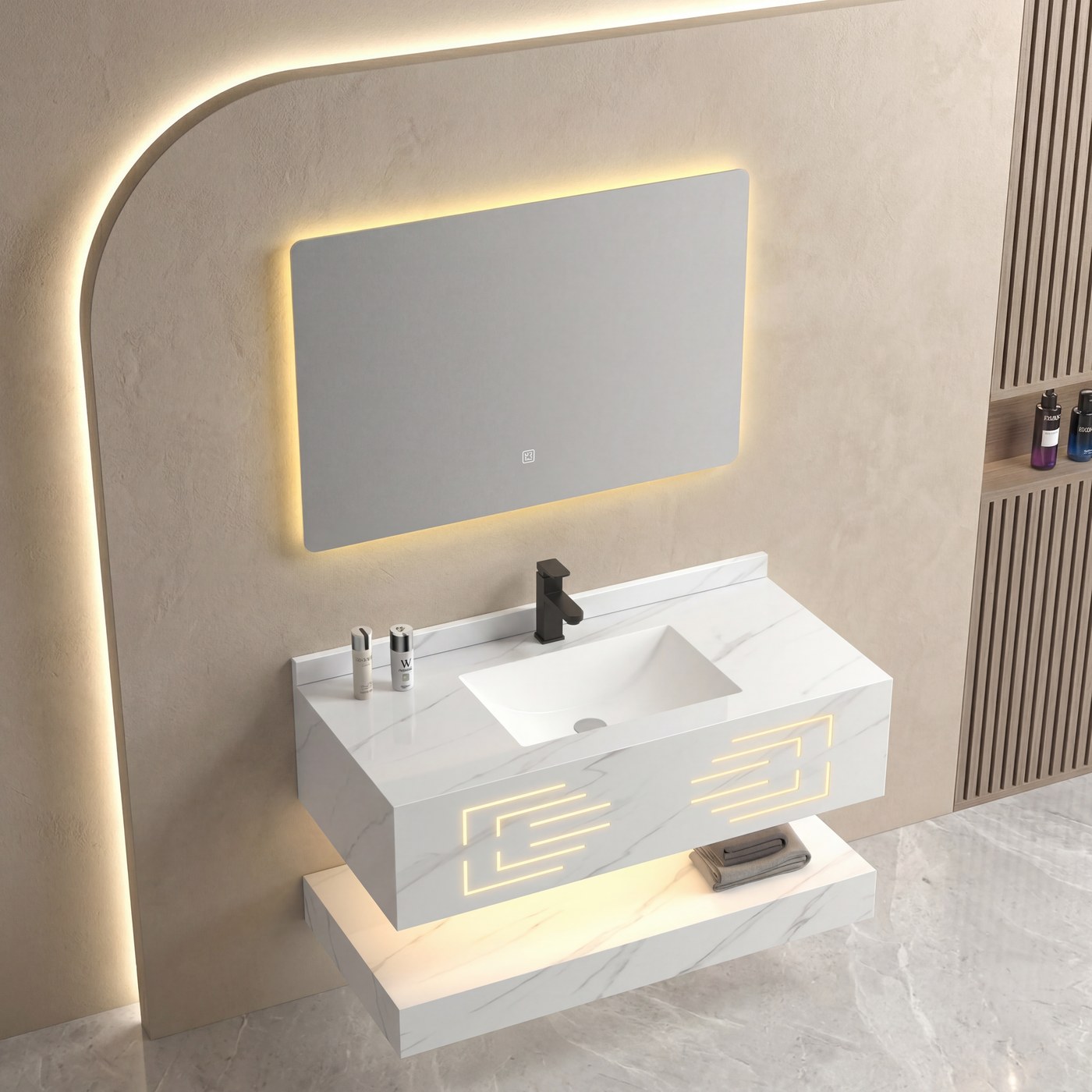
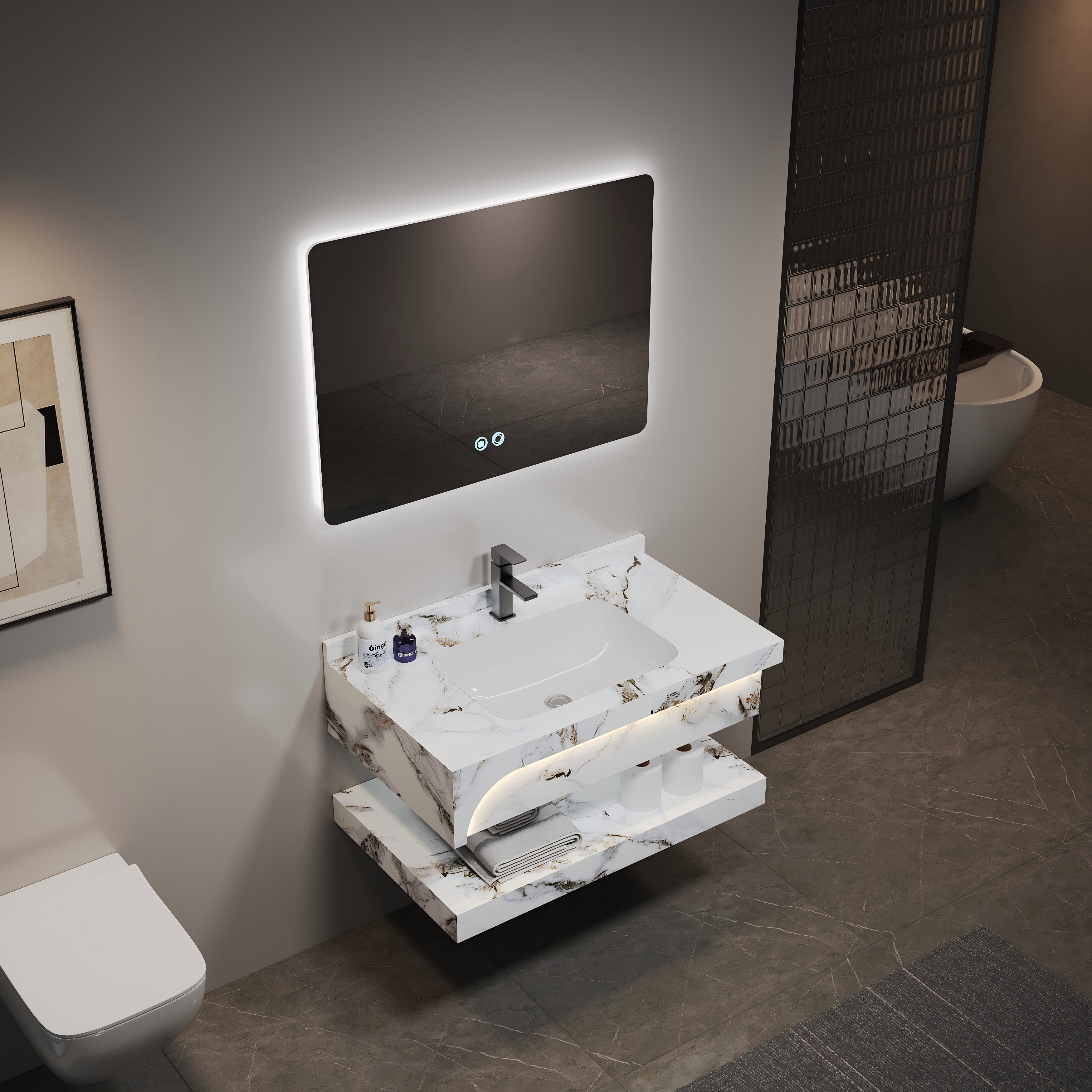

A practical note for importers: sintered stone adds weight. Confirm your inland freight and handling assumptions before you commit to a full container of slab-top units, and insist on corner protection and edge guards in the export carton. The material is extremely hard in service but can chip at an unprotected corner in transit.
Style 3: High-Density Board Vanities — The Volume Workhorse
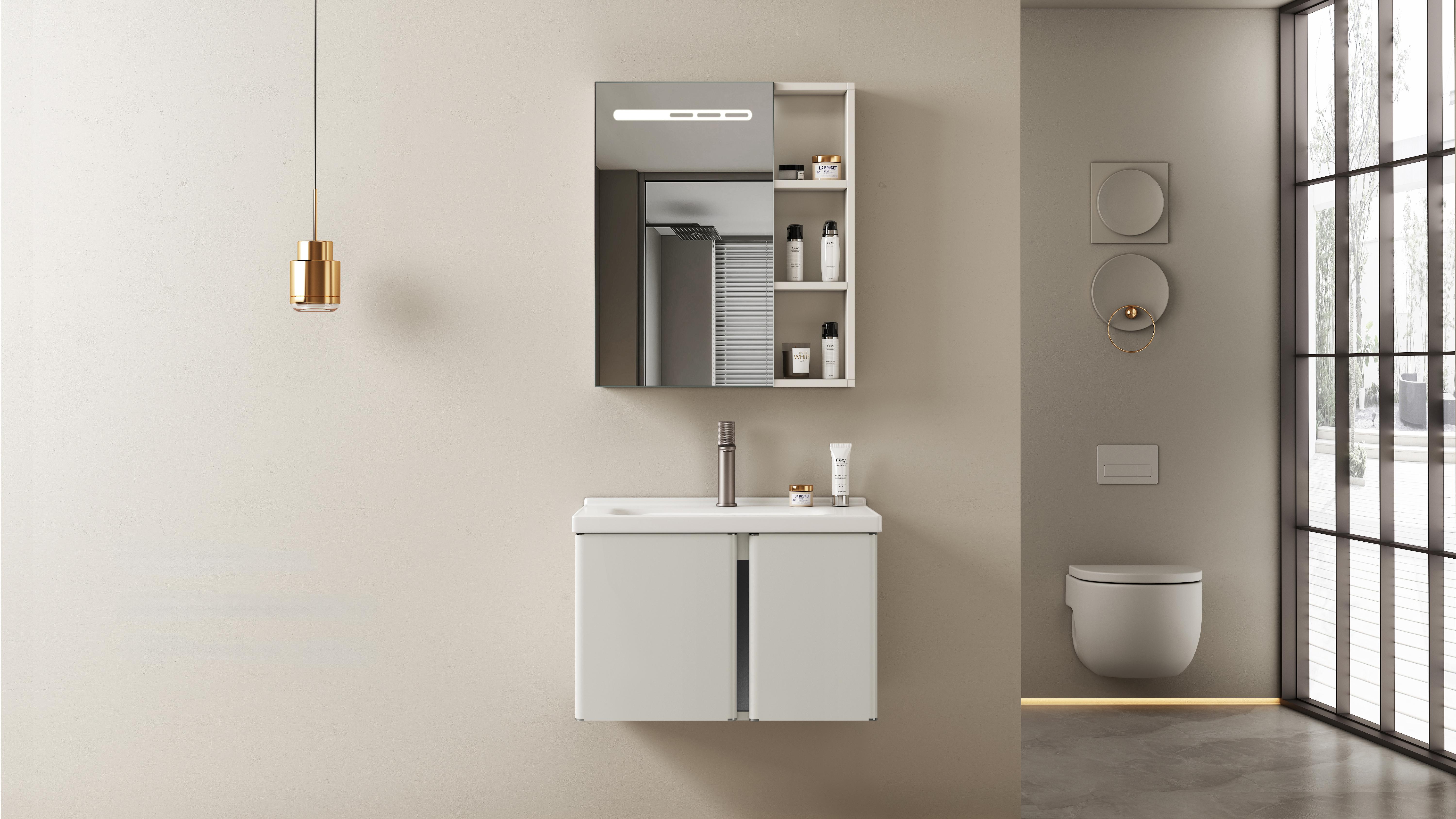
High-density fibreboard remains the backbone of mid-market volume, and for good reason. It is dimensionally stable, takes a consistent laminate or paint finish, and holds a screw at the hinge plate through repeated opening cycles. When the brief is a 200-unit apartment block or a distributor's entry-level shelf line, this is usually the correct answer.
The specification detail that separates a vanity that lasts five years from one that fails in eighteen months is edge and underside sealing. OYAQUA's high-density board units are built with sealed edge banding and a moisture-resistant back panel, and we recommend that buyers in West and Central Africa confirm this explicitly on their purchase order rather than assuming it.
Style 4: Premium Finished Board Vanities — The Design Upgrade Tier
Between solid wood and standard high-density board sits a tier that is growing faster than either: premium finished board. These units use a higher-grade substrate with a more refined surface treatment, allowing deeper textures, richer neutrals and finer edge detailing at a price point that stays inside mid-market budgets.
For distributors, this tier solves a specific commercial problem. It gives showrooms a visibly better product to trade customers up to, without requiring the customer to accept a solid-wood price or the maintenance conversation that comes with it.
Climate-First Specification: Matching Materials to African Regions
The most common and most expensive mistake we see is specifying a vanity that performs beautifully in a dry inland showroom and then shipping it to a coastal project. Africa contains both extremely humid coastal corridors and genuinely dry high-altitude interiors, and the correct board and top differ between them.
| Environment | Typical cities | Recommended board | Recommended top | Hardware note |
|---|---|---|---|---|
| Humid coastal, salt-laden air | Lagos, Tema, Accra, Abidjan, Dakar, Durban, Cape Town, Mombasa | Multi-layer solid wood or moisture-resistant premium board with sealed edges | Sintered stone | Matte or brushed finishes, marine-grade coating, stainless or coated hinges |
| Hot and humid inland | Kampala, Kisumu, Douala, Kinshasa | Sealed high-density or premium board, sealed back panel and underside | Sintered stone or ceramic | Soft-close hardware with corrosion-resistant coating; add anti-fungal sealant |
| Dry inland, high altitude | Johannesburg, Pretoria, Nairobi, Addis Ababa, Lusaka | Sealed high-density board is fully viable | Sintered stone, ceramic or engineered top | Standard coated hardware is acceptable; watch for UV fading on dark finishes |
| Hard-water regions | Widespread across North, East and Southern Africa | Any sealed construction | Sintered stone strongly preferred | Choose finishes that hide limescale; avoid polished chrome |
Additional construction checks worth putting on every purchase order: confirm that all six faces are sealed including the underside, that the back panel is moisture resistant rather than raw board, that edge banding is applied by machine rather than iron-on, and that the board carries a low formaldehyde emission rating appropriate to your destination market.
Storage, Power and Sizing: The Features Buyers Actually Pay For
Style gets the customer into the showroom; function closes the sale. Three feature groups consistently move the decision in 2026.
- Configurable storage. Around eight in ten NKBA respondents report demand for customisable storage modules, and 78% / 75% of Houzz renovators choose soft-close drawers and doors respectively. Deep drawer banks beat single-door cabinets in real use.
- In-cabinet power. Roughly eight in ten professionals report demand for outlets inside the vanity, keeping grooming appliances off the counter and away from the basin splash zone.
- Sizing up. With 72% of professionals expecting larger primary bathrooms and 39% of Houzz renovators enlarging showers, 800 mm and 1200 mm formats are taking share from 600 mm in owner-occupied homes — though 500 mm and 600 mm remain essential for apartments and guest baths.
For OYAQUA, this is why the range is structured by width first — 500 mm, 600 mm, 800 mm and 1200 mm — and by material second. A distributor can build a coherent shelf from a single supplier instead of stitching together mismatched finishes from three factories.
Finishes and Hardware That Survive Coastal Air
The NKBA finish ranking — matte at 54%, brushed at 51%, satin at 46%, polished at 39% — happens to align almost perfectly with what performs best in a humid, salt-exposed bathroom. Polished surfaces show every water spot and fingerprint, and they make limescale far more visible between cleans.
Specify matte or brushed finishes on handles, hinges and exposed metal, and insist on a corrosion-resistant coating on the hinge and drawer-runner mechanism itself. The mechanism is what fails first in coastal installations, and it is the component a customer will blame the cabinet for. Where the budget allows, stainless or marine-coated fittings are worth the incremental cost on coastal hotel projects.
Colour rule of thumb: with 96% of professionals naming neutrals as the leading palette and off-white at 58%, a neutral body with a warm wood or textured accent is the lowest-risk stocking decision for a distributor serving multiple markets. Reserve strong colour for a small number of display units.
Compliance, Freight and Packaging: What Importers Must Get Right
A beautiful vanity that clears customs late, arrives chipped, or fails a national standards check is a loss, not a sale. Four operational checks belong in every 2026 Africa order plan.
- 01Confirm conformity requirements before production. Nigeria's SONCAP programme is the most frequently underestimated requirement in West Africa. Establish whether your shipment needs a Product Certificate and a SONCAP Certificate, and build the lead time into your order schedule rather than discovering it at the port.
- 02Plan the port and the inland leg together. Abidjan serves as a regional logistics hub for landlocked neighbours; Tema, Lagos, Mombasa and Durban each have different inland cost profiles. Price your landed cost to the warehouse, not to the port.
- 03Specify export packaging in writing. Corner protection, edge guards, foam separation between the top and the cabinet body, and a drop-tested carton are far cheaper than a credit note. Slab-top units in particular need declared corner protection.
- 04Stock the spare parts, not just the units. Hinges, drawer runners and handles are the parts that get replaced. Holding a small spares consignment converts a warranty complaint into a five-minute fix.
OYAQUA supports export documentation and packaging specification as part of the order process; if you are building a first container for a new market, ask for the packaging specification sheet alongside the quotation so you can compare offers on like-for-like terms.
How to Build a 2026 Vanity Range for Africa in Five Steps
- 01Segment by climate first, by price second. Split your territory into coastal-humid, humid-inland and dry-inland, and set your minimum board and top specification for each before you look at cost.
- 02Build a three-tier ladder. High-density board at the entry tier, premium finished board in the middle, multi-layer solid wood and sintered stone at the top. Each tier should be visibly better than the one below it on the showroom floor.
- 03Cover the width ladder. 500 mm and 600 mm for apartments and guest baths, 800 mm as the volume core, 1200 mm for primary and hospitality bathrooms.
- 04Standardise on neutral with matte or brushed hardware. This satisfies the 96% neutral preference and the 54% matte preference while minimising your SKU count and your limescale complaints.
- 05Review sell-through quarterly, not annually. With value growing faster than volume across African sanitary ware, the mix is shifting. Rebalance toward the tier that is actually moving rather than the tier that was cheapest last year.
You can see how these tiers are constructed in practice on our Bathroom Vanity Cabinets category page, and our approach to material and finish development is described under R&D and Design.
Frequently Asked Questions
Which vanity material lasts longest in a humid coastal African city?
A sintered stone top on a moisture-resistant sealed board body. The top handles water and limescale, and the sealed board with machine-applied edge banding and a moisture-resistant back panel handles ambient humidity. Avoid untreated particleboard and unsealed undersides in coastal projects.
Are wood-look vanities a risk in West Africa's humidity?
Not if they are built as multi-layer solid wood with all faces sealed. The risk is decorative veneer over a non-moisture-resistant core, which is what usually causes swelling and edge failure. Ask your supplier to state the substrate and the sealing method, not just the finish name.
What width sells best?
600 mm remains the volume core for apartments; 800 mm is the most versatile single size for owner-occupied homes; 1200 mm and above serves primary bathrooms and hospitality. Keep at least one 500 mm option for guest and compact bathrooms.
Do I really need in-cabinet power outlets?
The trend data says demand is high — roughly eight in ten NKBA respondents report it — but local electrical compliance is the deciding factor. Confirm the requirement with a licensed electrician in the destination market and specify a properly rated, certified unit rather than improvising.
How do I avoid chipped slab tops in transit?
Require documented corner protection, edge guards and foam separation between the top and the cabinet, and ask for the carton to be drop-tested. Sintered stone is extremely durable in service but vulnerable at an unprotected corner during handling.
What documentation should I prepare for Nigeria?
Plan for the SONCAP conformity process, which typically requires a Product Certificate before shipment and a SONCAP Certificate for clearance. Build the lead time into your production schedule — it is the most common cause of avoidable demurrage in West African bathroom imports.
Key Takeaways for 2026
Africa's vanity market is trading up. Volume growth across African sanitary ware is modest while value growth is faster, which means the winning strategy is not the cheapest unit but the clearest good-better-best ladder. Build that ladder from high-density board at the entry tier, premium finished board in the middle, and multi-layer solid wood with sintered stone tops at the top.
Then let climate decide the details. Seal everything, specify matte or brushed hardware, cover the 500 / 600 / 800 / 1200 mm width ladder, and treat documentation and packaging as part of the product rather than an afterthought. Do that, and the 2026 trends — warm wood, neutrals, spa restraint, smarter storage — become a specification you can actually deliver rather than a mood board.
OYAQUA is the bathroom brand of Jiangmen Muquan Sanitary Ware Co., Ltd. To discuss a 2026 range for your market, visit our contact page or submit an inquiry.