Discover the New OYAQUA Bathroom Collection
2026 Collection
Discover the New OYAQUA Bathroom Collection
Seven new collections. Four finish families — chrome, brushed gold, gunmetal and matte black. And in every single series, a choice of exposed or concealed installation. The 2026 OYAQUA collection is built around one practical idea: the finish you see in a photograph is also the surface you have to live with for the next decade.
This release has been put together for the people who actually range, specify and install bathroom fittings — hardware retailers, plumbing wholesalers, contractors and project buyers working across African markets. It sets out what each finish family really is, who it suits, how good it looks once it is on a wall instead of on a screen, and what sits behind the surface when the wall is open.
The one rule behind the whole range is consistency. Where a finish is committed to, it is carried across the basin mixer, the shower set, the concealed valve and the accessories, so that a room reads as one decision rather than a collection of near-misses. Manufacturers' blacks, golds and greys differ subtly between ranges, and those differences are far more obvious on a finished wall than in a product photograph.
Why It Matters
Why Finish Comes First in 2026
Finish has stopped being the last decision in a bathroom and become one of the first. The direction across the 2026 design cycle is away from harsh, mirror-like shine and sharp black-and-white contrast, and towards warmer, more tactile surfaces — brushed and satin looks that cut glare and are far more forgiving of daily handling.
What has changed alongside the look is the reason buyers give for choosing it. Ten years ago a finish was chosen on appearance alone. In 2026 it is chosen on appearance plus maintenance, and the maintenance argument is usually the one that closes the sale once a customer has seen a fitting under real bathroom light.
| Finish family | What it reads as | Where it suits | Day-to-day upkeep |
|---|---|---|---|
| Chrome | Crisp, bright, reflective | Compact bathrooms, rental and volume housing, classic layouts | Shows water marks — needs regular wiping |
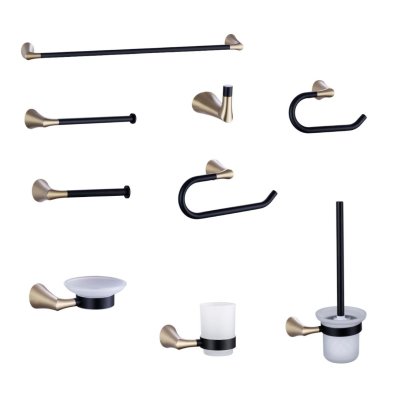
| Brushed gold | Warm, quiet, spa-like | Master bathrooms, hotel suites, warm stone and wood palettes | Low — brushed grain hides spotting |
| Gunmetal | Deep, architectural, softened by a soft sheen | Contemporary layouts, concrete-look and grey tile | Low — does not show fingerprints |
| Matte black | Graphic, confident, low-glare | Statement bathrooms, white tile and warm wood contrast | Low — absorbs light and hides marks |
Mixed metals are also more common than they were, as long as they are handled with restraint. The workable rule is one dominant finish for the wet-area fittings plus one deliberate accent, with each finish repeated at least twice so the pairing looks planned rather than accidental.
Chrome
Chrome, in Three Design Languages
Chrome remains the most widely specified finish for shower and basin fittings, and for good reason: it is hard-wearing, easy to match, and reflects light in a way that makes small bathrooms feel larger. For rental apartments, social housing and volume projects it is still the safest and most cost-effective choice — chrome typically comes in below equivalent matte black fittings on price, which matters when a developer is buying for fifty units at once.
Its weakness is equally well documented. A highly reflective surface shows every dry water mark, limescale drop and fingerprint, so a chrome bathroom rewards a household that wipes down regularly and punishes one that does not.
Rather than ship one chrome shape and call it a range, the 2026 collection uses chrome across three distinct design languages, so the same finish can be specified into very different rooms:
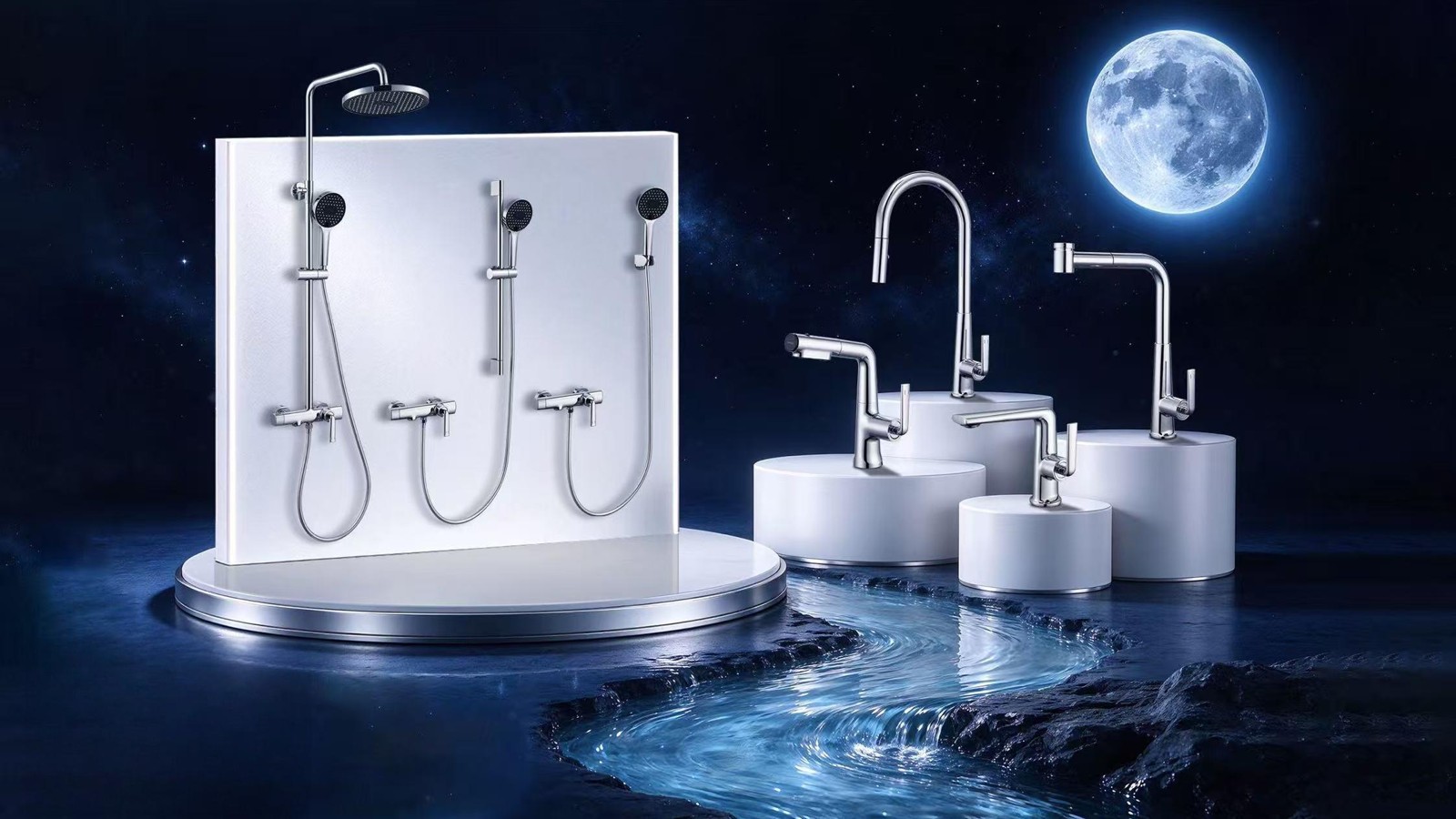

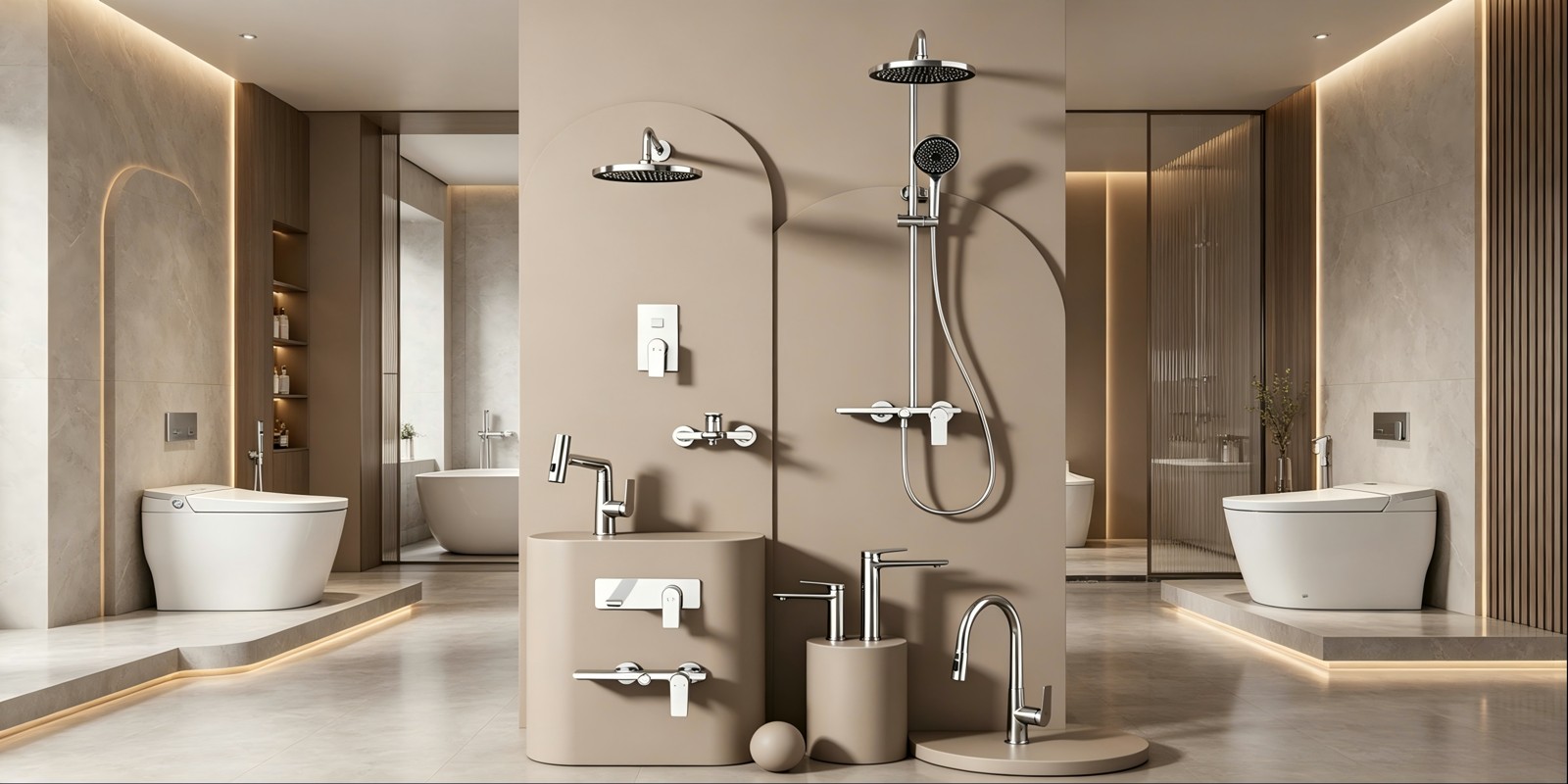
The three read differently on a wall — the rounded profiles sit comfortably in family bathrooms and classic layouts, while the straight, flat-faced language suits contemporary and minimalist schemes where tile lines and fitting lines are meant to agree.
Brushed Gold
Brushed Gold: Warmth That Still Looks Modern
Warm metallics are the strongest pull in the current cycle, and brushed gold is the finish carrying most of it. The distinction that matters is brushed versus polished. A polished brass fitting catches light in sharp flashes; a brushed or satin surface diffuses it, so the finish reads refined rather than flashy, and reads the same way at nine in the morning as it does at nine at night.
The practical argument is stronger than the aesthetic one. Brushed grain breaks up reflections, so hard-water spotting and light scratches are far less visible than on a mirror-polished surface. In markets where supply water is high in dissolved minerals, this is the difference between a fitting that looks maintained and one that looks neglected, even when both are cleaned on the same schedule.

This is also the finish that best rewards a coordinated approach. Gold reads as a deliberate choice, and a deliberate choice looks like a mistake when the shower trim is gold and the basin mixer is chrome. Warm metallics pair most naturally with cream and beige tile, walnut or medium-tone wood, and warmer lighting — cool white LED light tends to flatten champagne and gold tones rather than flatter them.
Gunmetal
Gunmetal: Depth Without the Hardness of Black
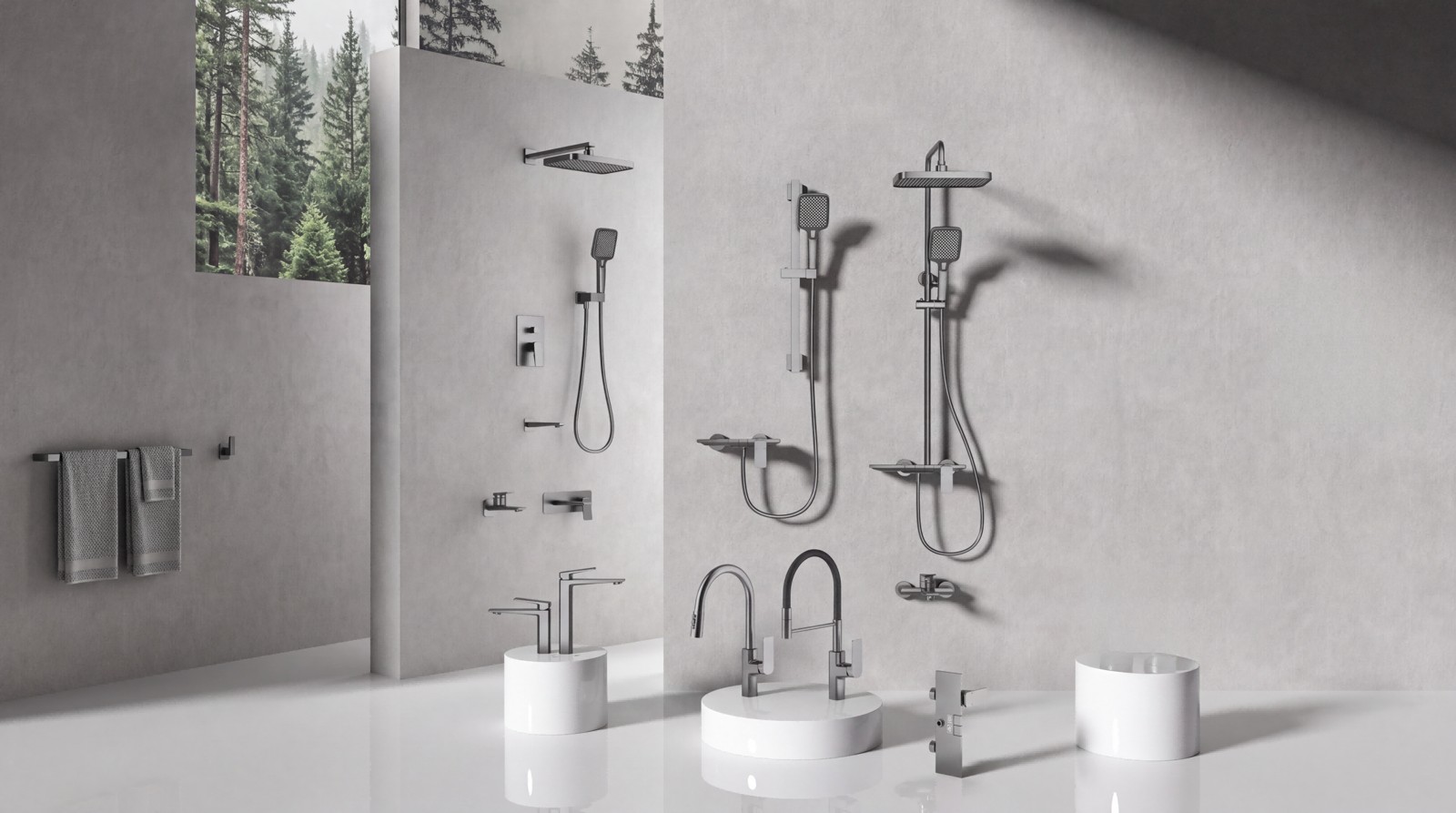
Gunmetal and graphite tones have grown quickly because they solve a specific problem: buyers want the depth and presence of a dark fitting without the flat, absolute contrast of matte black. Gunmetal carries a soft sheen that shifts slightly with the viewing angle and the time of day, which gives a room depth while staying quieter than black against white sanitaryware.
It is also one of the easier dark finishes to live with. Because the surface is dark but not flat, minor water marks and fingerprints disappear into the tone rather than sitting on top of it, and there is no glare to catch the eye on a bright morning. That combination — architectural presence, low upkeep — is why gunmetal has moved from a niche choice into the mainstream of contemporary and hospitality specification.
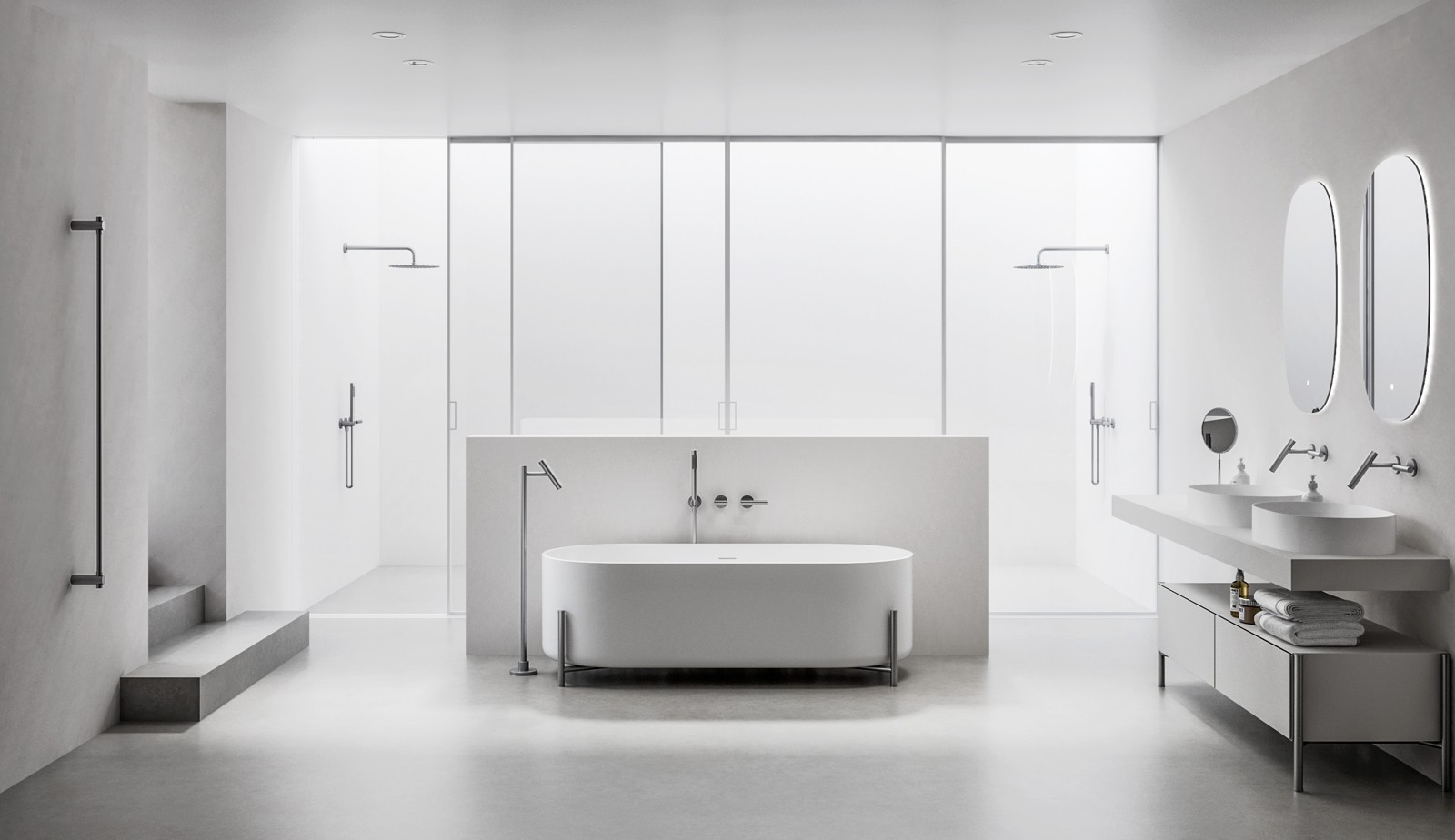
Where it works best is against cooler, harder surfaces: concrete-look tile, grey stone, dark wood and linear lighting. Where it struggles is in a room that already carries strong pattern — gunmetal wants a calm background to sit against, not competition.
Matte Black
Matte Black and Piano-Key Control
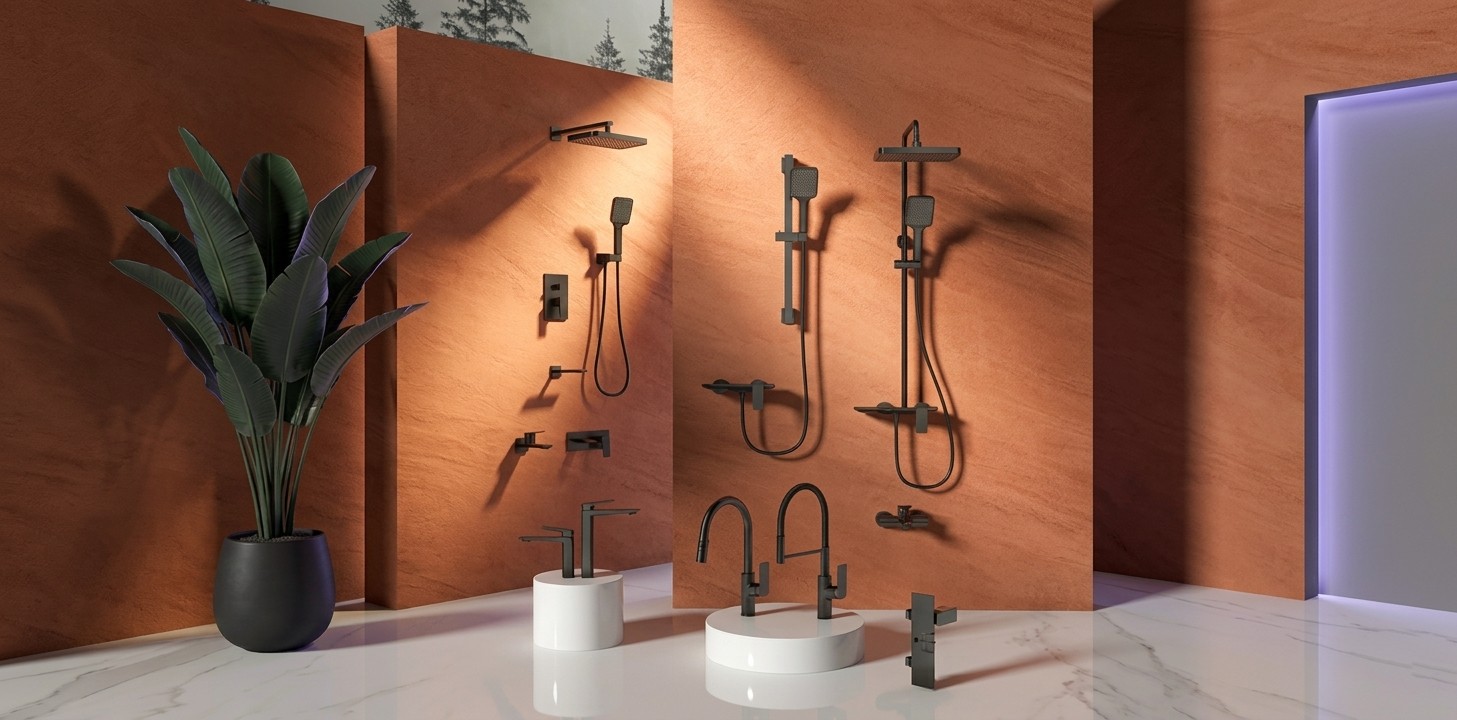
Matte black has moved well past the point of being a trend and settled into a staple. A non-reflective surface absorbs light rather than bouncing it, which means fingerprints, soap streaks and water marks show up far less than on polished alternatives — the single most common reason customers give for choosing it in the first place.
The honest qualification is that an entire room finished in black is starting to read as a specific moment in time rather than a neutral choice. The current approach is to treat matte black as a controlled accent: repeat it across two or three fittings, then balance it against warm materials — wood, textured tile, softer wall colour — so the room feels designed rather than themed. On white tile in a larger bathroom, black remains the most graphic contrast available.
The 2026 collection also introduces a control format that separates these two series from the rest of the range: push-button, piano-key style control. Instead of a lever that has to be turned and positioned, each outlet is switched by a flat key, which gives a clean, unbroken face to the wall and makes the shower simpler to explain, simpler to use and simpler to replace if a single element ever needs servicing.
Installation
Exposed and Concealed in Every Series
One of the more useful things about this release, particularly for wholesalers holding stock for both retail and project customers, is that every series in the collection covers both installation methods. Nothing in the range forces a customer into a single plumbing configuration.
An exposed set brings the riser rail, the valve body and the connections out onto the wall. It suits retrofits, rental units and any bathroom where the wall is already tiled or where future servicing needs to be reached without opening anything up. A concealed set buries the valve body in the wall and leaves only the plate and the trim visible, which produces the flat, uninterrupted wall that most contemporary bathroom photography is built on — at the cost of a decision that has to be made before tiling begins.
Five things to settle before the tiles go on. Concealed work is where late decisions become expensive, because changing your mind once the wall is closed is a demolition job rather than a swap. Confirm the installation method, the control type, which outlets you need, where the mixer sits relative to the spray, and the finish — and confirm all five before first fix rather than during it.
Positioning is the detail that gets skipped and then regretted. Placing the mixer so it can be reached from outside the spray means a user can start the shower and let it come to temperature without standing under cold water, which is a small thing that is appreciated every single day.
Behind the Finish
What Sits Behind the Surface
A finish only performs as well as the base metal under it. Across the 2026 collection the range covers four body materials — SUS304, SUS201, zinc alloy and brass — chosen per product according to where each one is used rather than applied uniformly across the line.
| Body material | Where it is normally used | Typical service life in a bathroom |
|---|---|---|
| Brass | Concealed valve bodies and thermostatic shower cores, where the water path is permanent and invisible | 20–30 years |
| SUS304 stainless steel | Exposed bodies in humid and coastal conditions | 15–20 years |
| SUS201 stainless steel | Everyday interior fittings in inland markets | 10–15 years |
| Zinc alloy | Light-duty decorative components and selected mixer bodies | 5–10 years |
The numbers are not absolute — manufacturing quality, wall thickness and plating preparation move a fitting up or down within its band — but the order rarely changes. The practical buying lesson is that in constant humidity, brass and quality stainless resist corrosion noticeably better than light zinc alloy, and a very light fitting in the hand usually contains more lightweight alloy and thinner walls than a heavy one of the same size.
Two more things sit behind the visible surface. Every fitting in the range uses a ceramic cartridge for the on/off and temperature control, which is the part most likely to be worked thousands of times over its life. And the decorative surfaces are applied by PVD vacuum coating, which is generally harder-wearing than painted or powder-coated finishes and better at resisting scratching, hard-water staining and fingerprint marking. Base metal and surface preparation still determine how long any coating lasts, so the coating should be read as one layer of the specification rather than the whole of it.
Choosing
Choosing a Finish for Your Water, Climate and Cleaning
The same finish can be the right answer in one market and the wrong one in another, and the variables are specific rather than abstract: how salty or how hard the water is, and how aggressively the room gets cleaned.
In coastal cities, salt-laden air combined with year-round humidity is the harshest environment a bathroom fitting will meet. Low-grade zinc alloy fails there quickly. Chrome plating, solid brass and SUS304 stainless all hold up considerably better, and where a dark finish is specified in a coastal building it should be a coated one whose coating quality is verified rather than assumed, since a delicate matte coating degrades faster in salt air than an electroplated surface does.
In hard-water areas the calculation changes. No finish is immune to mineral spotting, but brushed and satin surfaces hide it far better than polished chrome or polished nickel, because the grain scatters the light that a mirror finish would return directly to the eye. A straightforward wipe with a soft cloth remains the real answer in every case, and abrasive cleaners should never be used on a PVD or brushed surface — the cleaning routine itself is a common cause of finish failure.
In high-turnover buildings — hotels, schools and other facilities where cleaning happens daily, across many rooms, by different hands — the priority shifts again. There, finish should be chosen for cleaning speed and scratch resistance rather than colour alone, which points towards brushed and PVD-coated surfaces in preference to delicate matte coatings that punish the very cleaning they need.
| Condition | What to prioritise | Watch out for |
|---|---|---|
| Coastal or salt air | Chrome, solid brass or SUS304 bodies; verified coating on dark finishes | Lightweight zinc alloy and unverified matte coatings |
| Hard water | Brushed and satin surfaces over polished ones | Mirror-chrome in a room nobody wipes down |
| Daily high-intensity cleaning | PVD and brushed finishes built for scratch resistance | Delicate matte coatings used with abrasive cleaners |
| Retrofit or rental | Exposed sets, easy to reach and easy to service | Committing to concealed work after tiling |
FAQ
Frequently Asked Questions
Which finish is best for a coastal city?
Chrome, solid brass or SUS304 stainless bodies cope best with salt air. If a dark finish is required, specify a coated one and check the coating rather than assuming it, because a low-grade coating will fail faster by the sea than the same fitting would inland.
Is matte black going out of style?
Not out of style — past its peak as an all-over scheme. Used across two or three fittings against lighter finishes and natural materials it still looks current. Whole rooms of black hardware are the part that is starting to date.
Can I mix finishes in one bathroom?
Yes, with discipline: one dominant finish for the wet-area fittings, one deliberate accent, and each finish repeated at least twice so the pairing looks intentional. Keep the faucet, shower trim and bath filler in the same finish family.
Do I have to decide the finish before tiling?
For concealed work, yes. The valve body, plate and outlet positions are set before the wall closes, so the installation method, control type, outlets and finish all need to be confirmed at first fix.
Key Takeaways
Key Takeaways
- Finish is now a maintenance decision. Warm metals and brushed surfaces dominate 2026 because they hide spotting and handling marks that mirrored surfaces advertise.
- Four finishes, three chrome languages. Chrome, brushed gold, gunmetal and matte black — with chrome offered in rounded, geometric and classic profiles so one finish fits very different rooms.
- Piano-key control is the new design signature. Flat push-button switching replaces the lever, giving a clean wall face and simpler servicing.
- Specify for water and climate, not only colour. PVD coating, a ceramic cartridge and the right base metal matter more in salt air and hard water than the shade on the catalogue page.
Related Reading
Keep Exploring
OYAQUA builds only its own brand. If you supply bathrooms in African markets, talk to us about the 2026 collection, the finishes that move in your water and climate, and how the range is held for your region.