A Quick Look at the Sanitary Ware Market in Seven African Countries: Channel Structure and Trends
Market Map Kenya, Tanzania, Uganda, Nigeria, Senegal, Zimbabwe and Guinea all build far more bathrooms than they manufacture. In every one of them, the sanitary ware that ends up on a wall has passed through at least three sets of hands before a plumber opens the box — and the people holding it at each step are running very different businesses. That chain, not the product, is what decides who makes money in these markets. This is a short structural map of it: how much each market imports and why, how the four links in the chain divide the work and the margin, where the seven markets stop behaving alike, and what is changing now. Figures come from published trade data for 2024 and the UN-Habitat urban review published in 2026, with channel detail from market research on Kenya, Nigeria and Senegal. Ranges are written as ranges. Scale Sanitary ware here splits into two trades counted separately and behaving differently. Ceramic fixtures — basins, closets, pans — are the value line, at an average import price near USD 23 a unit. Iron and steel sanitary ware — sinks, traps, brackets, the fittings that walk out of hardware shops — is the volume line, at roughly USD 6 a unit. Africa imported about 13 million ceramic sanitary fixtures in 2024, worth roughly USD 302 million. Nigeria took 3.3 million units — around a quarter of the continental total — and just over USD 90 million in value, close to 30 per cent. Tanzania came second at 1.26 million units, then Kenya at 970,000 and Senegal at 797,000. The steel line moved about 17 million units and USD 104 million, led by Kenya at 2 million and Nigeria at 1.9 million. Note that the ranking is not the same: the country that buys the most basins is not necessarily the country that buys the most traps. Behind those numbers is a structural gap rather than a price preference. UN-Habitat puts Africa's housing deficit above 53 million units — Nigeria alone at 17 to 28 million, Tanzania at 3 million, Uganda at 2.4 million, Kenya at 2 million. Domestic capacity covers only a minority of it: Kenya imports an estimated 70 to 85 per cent of consumption and Nigeria's plants run at 30 to 50 per cent utilisation. That is why the channel here is not a distribution layer on top of a manufacturing business. The channel is the supply system. Structure Strip away the country differences and the same four functions appear in all seven markets. They are worth separating because each one earns differently, carries different risk, and buys for a different reason. Books the container, carries the foreign-exchange exposure, clears the port, and sells in cartons and pallets. This is the only link that sets a genuine landed-cost anchor. Its margin is not the widest in the chain, but its capital requirement is the heaviest — which is why the same handful of names tend to control supply in each market for years at a time. Breaks bulk, holds the range, and extends short credit. This is the link that converts a container into a shop-sized order, and the one that decides which brands a whole district of retailers can actually offer. Volume is the business; margin per unit is thin, and the leverage sits in turn rather than price. A counter, a display wall, and a stock of singles. Retailers can substitute brands easily and are judged by their customers on availability and price, so brand loyalty at this layer is shallow unless someone is actively supporting it with display, samples and spares. Developers, contractors, hospitality and institutional buyers. This link buys in bulk against a specification, expects complete bathroom packages rather than individual fittings, and negotiates credit and delivery dates. In Nigeria it accounts for an estimated 40 to 50 per cent of formal-channel value — the most valuable route to market, and the hardest to serve. The further down the chain a sale happens, the less it is decided by brand and the more by availability and credit. That is the organising principle of the whole structure. Margin Margin in this trade is not distributed evenly, and the spread is wider than most new entrants expect. Nigerian market research puts open-market wholesalers at 10 to 15 per cent, while modern retail and project distributors reach 20 to 35 per cent on premium products. Same country, same category, roughly double the margin — the difference is entirely in what the seller is asked to provide. The open market earns less because it competes on price and speed alone; buyers there are often small builders and plumbers paying cash who will walk to the next stall over a small difference. The project channel earns more because it absorbs risk the open market refuses — specification responsibility, staged delivery, credit terms, and the obligation to still be reachable when something fails eighteen months later. In Nigeria the split follows that logic: open markets and wholesalers take an estimated 45 to 60 per cent of volume, modern retail and building-material outlets 25 to 35 per cent, and project channels 10 to 20 per cent. In markets where import costs have moved as far as they have, retail prices can shift 20 to 40 per cent inside a year, which is why long price lists are treated as fiction and quoting happens order by order. Differences The four functions are universal. How they are combined, and who controls them, is not. Mombasa and Dar es Salaam are the two gateways, and everything inland is a road journey from there. Kenya's market research names the practical barriers bluntly: access to reliable import supply, working capital to finance inventory, and distribution reach beyond Nairobi. Uganda is landlocked, with most containerised goods arriving through Mombasa before moving inland by road — a leg and a cost a coastal market never carries. Tanzania is the second-largest ceramic importer in Africa and also a meaningful regional producer of steel sanitary ware. Nigeria is the largest market on the continent and the most open-market driven; the wholesale cluster still moves the majority of volume even as project channels grow faster. Senegal is the fastest-growing importer in Africa but highly fragmented — hundreds of active importing companies in a single year, sourcing split between China, Spain and France, a pattern that reflects both price tiers and the commercial links of a francophone market. Guinea runs through a single gateway with a largely informal materials trade, demand concentrated around Conakry and the mining belt. Zimbabwe behaves differently from the other six. Trade records show most of its ceramic sanitary imports arriving from South Africa rather than directly from Asia. That shortens the lead time considerably — a truck instead of a vessel — but narrows the range available and inserts an extra margin layer between factory and shelf. In practice it makes Zimbabwe a market where price is set regionally and range is set by whichever South African distributor the local importer happens to buy from. Trends 1. Project and distributor channels are growing faster than open-market retail. Developers and hospitality operators increasingly prefer bulk procurement with warranty and after-sales support, which shifts value away from the stall and towards whoever can document, deliver and service. 2. Digital ordering is compressing the chain. B2B platforms, social commerce and messaging-based ordering let younger contractors and retailers reach importers directly. It does not remove the wholesale function, but it removes some of the layers that used to sit inside it. 3. Organised retail is taking share in cities. Building supermarkets and branded showrooms offer fixed pricing and a wider range, and they gain in urban centres where buyers value a predictable experience over a negotiated one. Traditional dealers still dominate smaller towns, where credit and proximity win. 4. Buyers are trading down inside the category. Where affordability has tightened, demand has shifted towards compact and mid-range units. This is a mix shift, not a decline — the unit count holds up while the average specification falls. 5. Local assembly is growing at the margin. Kenyan glazing and finishing operations adapt imported blanks; Nigerian thermoforming clusters are moving part of the mix from fully imported units to locally assembled ones. Neither replaces imports at mass-market price points, but both change what an importer is competing against. OYAQUA The practical conclusion is that these markets reward a supplier who can be physically present at the third and fourth links. Price gets a container ordered; availability gets it reordered. OYAQUA works the seven markets in this article directly. It holds local warehouses and local sales teams in Kenya, Tanzania, Uganda, Nigeria, Senegal, Zimbabwe and Guinea, so the third and fourth links can buy in shop-sized quantities instead of waiting on a container. Where there is no local warehouse, orders ship from China stock with end-to-end tracking, a single point of contact and a confirmed loading date — a different proposition, and worth being clear about which one applies before a season is planned. For partners building a territory, the support extends past the pallet: starter packs, samples, catalogues and retail display kits, protected territories and margins so a neighbouring dealer is not undercutting the same range, co-marketing, and training that helps a sales team explain a product rather than discount it. Local stock shortens the last mile. The rest is what turns a first order into a repeat one. FAQ Which of the seven markets is the largest for sanitary ware? Why does the open market still dominate if project channels pay better? Do I need a local partner to sell into these markets? Summary 1. The import bill is structural. A continental housing deficit above 53 million units, against domestic capacity covering a minority of demand, makes the channel the supply system rather than a layer on top of it. 2. Four links, four economics. Importer, wholesaler, retailer and project supplier each carry different risk and earn different margins — roughly 10 to 15 per cent in the open market against 20 to 35 per cent in project and modern retail channels. 3. The seven markets diverge on logistics, not on structure. Gateway, inland leg and sourcing origin change the cost base and the range; the four functions stay the same. 4. Availability is the competitive weapon. Price wins the first order in every one of these markets. Stock position, credit and spares win the ones after it. OYAQUA holds local warehouses and sales teams in Kenya, Tanzania, Uganda, Nigeria, Senegal, Zimbabwe and Guinea, and ships from China stock with full tracking where no local warehouse exists.Seven Countries, One Import Bill
Why These Seven Markets Import So Much
The Four Links in the Chain
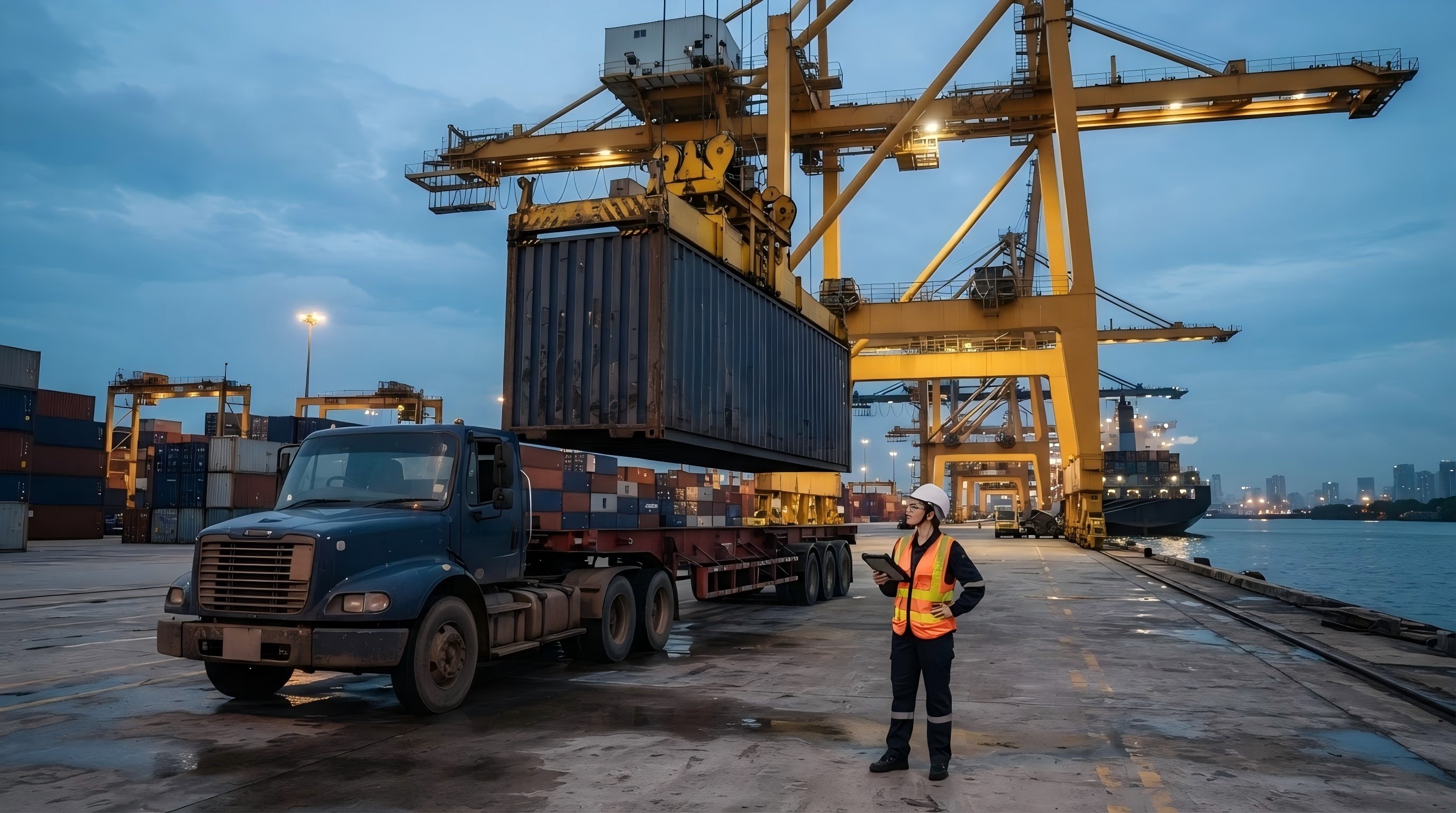
The importer or consolidator
The regional wholesaler
The hardware and building-material retailer
Project supply
What Each Layer Actually Earns
Where the Seven Markets Diverge
East Africa: Kenya, Tanzania, Uganda
West Africa: Nigeria, Senegal, Guinea
Southern Africa: Zimbabwe
Market Main gateway Dominant route to the buyer What decides the sale Nigeria Lagos Open-market wholesale, then retail; project supply growing faster Price and availability at the low end; complete packages and credit in projects Tanzania Dar es Salaam Wholesale to hardware retail, plus regional re-supply Volume pricing and inland reach Kenya Mombasa Traditional dealers, organised retail, direct project sales Distribution beyond Nairobi; working capital Uganda Mombasa, by road Wholesale to Kampala, then regional towns Inland freight cost and stock position Senegal Dakar Highly fragmented importer and wholesale base Sourcing tier — Chinese volume against European range Zimbabwe Road from South Africa Importer to hardware retail Regional price anchor and range depth Guinea Conakry Informal materials trade plus project supply Availability near site and reliable delivery Five Trends Reshaping the Channel
What This Means for Suppliers — and What OYAQUA Does
Frequently Asked Questions
Nigeria, by a wide margin — about a quarter of Africa's ceramic sanitary fixture imports by volume and close to 30 per cent by value. Tanzania is second on volume, followed by Kenya and Senegal. Uganda, Zimbabwe and Guinea are smaller in reported trade terms but active construction markets in their own right.
Because most buyers are small builders, plumbers and households paying cash, and the open market is where they can buy a single unit at a negotiable price. Project supply is more profitable per unit but requires capital, documentation and delivery discipline that most sellers in the chain do not have.
For the retail layer, in practice yes. Distribution reach beyond the capital city, credit to retailers and the ability to hold stock locally are not things a distant supplier can replicate from a price list. For project supply, the same is true with the added requirement of on-site support.Key Takeaways