Creating Local Jobs and Developing Skills in Africa
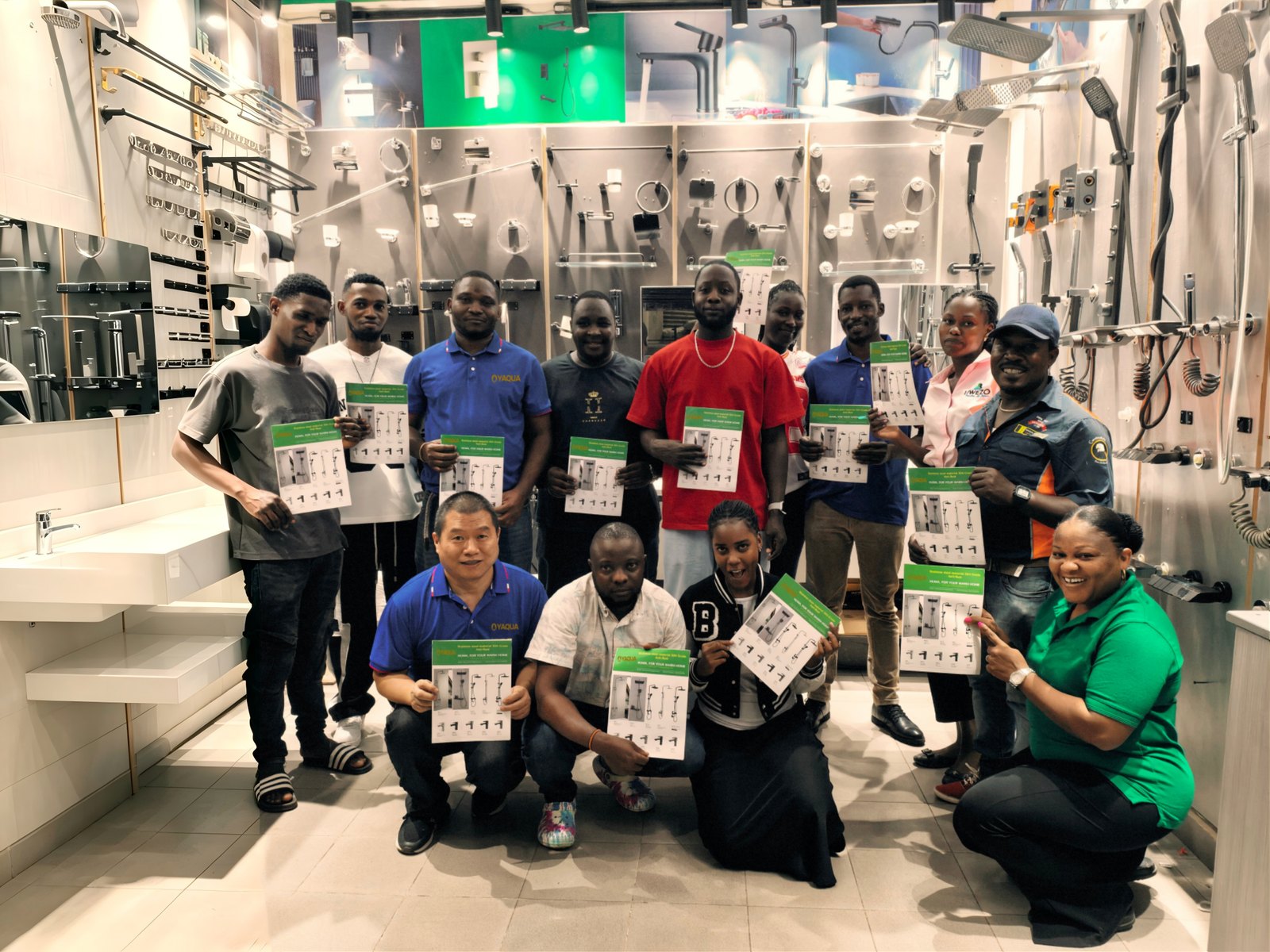
OYAQUA’s presence in Africa is not only stock sitting in a warehouse. It is stores with people in them — local staff who sell, advise and follow up with customers in the markets they come from. OYAQUA opens local stores in the markets it serves and hires from those markets. The China-based team travels out to train and to set the standard; the stores are run by local people. Across its seven African markets combined, the company employs more than 50 local staff in total — in sales, store and customer-facing roles, alongside the after-sales, warehouse and installer-training work those teams also handle. Hiring locally is not only a cost decision. A store run by people from the market sells differently: they know the customers by name, understand the language and the installation habits of the area, and hear about a problem before it becomes a complaint. Training here does not arrive as a manual. When OYAQUA opens a new market, an experienced salesperson from the China team travels with the launch and stays on the ground for one to two months, working alongside the people just hired rather than presenting to them. What they cover is the working model and the trade itself: The trainer does not leave on a fixed date. They leave when the local team can handle the work independently — that is the condition, not the schedule. The relationship does not end there either. Every year, salespeople from China travel back to each market to review how the local team is working: what has been quoted and sold, where the difficult cases were, and how to solve that class of problem faster the next time it appears. What stays behind is not only product familiarity. Someone who can advise on bathroom fixtures, read a specification and manage a customer relationship can work across building materials — not only in one brand’s store. It also keeps one standard across markets. A buyer in one country gets the same answers, the same selection logic and the same after-sales follow-up as a buyer in another, because the people in both stores were trained by the same team to the same threshold. The numbers behind youth employment in Africa are stark. The World Bank estimates the continent creates roughly 3 million formal jobs a year, while 10–12 million young people enter the labour market annually. The ILO’s 2026 outlook puts around 90% of employment in Sub-Saharan Africa in the informal sector, with only about 24% of new workers landing formal wage-paying roles. Against that background, a formal job with structured training is not a small thing. It gives someone a wage, a skill set and a reference — the three things that are hardest to obtain without a first formal job. Selling into a market and operating in it are different businesses. Operating means keeping a store staffed, keeping a team trained, and sending people back year after year to check that the standard still holds. No single company closes a gap of that size, and OYAQUA does not claim to. What a company can do is make sure the jobs it creates are real, local, and skilled — and that the people in them are given something they can carry to the next role. Partners and customers who want to know more about OYAQUA’s local operations can reach us through our Contact page.Local Employment
How the Skills Are Transferred
What the Local Team Ends Up With
Why This Matters in This Market
A Long-Term Commitment, Not a Sales Channel