Home / All / SUPPORT / Who is responsible for warranty and after-sales support for OYAQUA products purchased locally?
Who is responsible for warranty and after-sales support for OYAQUA products purchased locally?
Update Time:2026/10/16
Who is responsible for warranty and after-sales support for OYAQUA products purchased locally?
Start with the seller who invoiced you. If you bought from a local Oyaqua warehouse, distributor or authorised dealer, that company is your first point of contact for any warranty or after-sales request — it logs the claim, inspects the product and arranges the fix. Oyaqua, as the manufacturer, stands behind that seller: we confirm whether the fault is a manufacturing defect, supply the spare parts or replacement unit, and provide the technical guidance needed to close the claim. Warranty covers defects in materials and workmanship, not damage caused by installation errors, misuse, unauthorised repair or unsuitable cleaning products.
The Short Answer: Three Parties, Clear Roles
Your Local Seller
First to respond
The distributor, dealer or warehouse that issued your invoice handles claim intake, on-site inspection, photos and serial-number checks, and carries out or schedules the repair. In most markets the seller is legally the first responsible party, and then recovers costs from the manufacturer when the fault is a factory defect.
Oyaqua (Manufacturer)
Backing the warranty
Oyaqua defines the warranty policy, confirms whether a fault is a manufacturing defect, supplies genuine spare parts and replacement units, and provides technical documentation and repair guidance. Manufacturing defects remain the factory's responsibility for as long as the stated warranty period runs.
You, the Buyer
Correct use and care
You are responsible for installation by a qualified installer, following the care instructions, keeping the invoice and warranty card, and reporting a fault promptly instead of continuing to use a leaking or damaged unit. Damage from misuse, alteration or third-party repair normally falls outside warranty.
Who Handles Which Situation
Situation
Who handles it
What usually happens
Component fails early with no visible damage
Local seller claims, Oyaqua confirms
Treated as a manufacturing defect: repair, part or replacement under warranty
Wrong model, wrong finish or missing parts on arrival
Local seller
Pick-up and exchange from local stock, usually fastest to resolve
Damage noticed before installation
Local seller, with Oyaqua support
Report within the receipt window with photos; do not install the damaged unit
Leak or failure after installation
Investigated first
Covered if caused by the product; not covered if traced to installation or site pipework
Surface dulled or stained by a harsh cleaner
Buyer / installer
Chemical and abrasive damage is excluded; use pH-neutral bathroom cleaners
Cartridge dripping after long service
Local seller, part from Oyaqua stock
Wear parts are consumable; cartridge replacement is fast when stocked locally
Spare part needed after the warranty period
Oyaqua via the local warehouse
Paid spare parts supplied subject to availability for the model
Product modified or repaired by a third party
Buyer
Warranty is void for the altered part; Oyaqua can still advise on paid repair
Keep the invoice and the warranty card that came with your unit — the purchase date on the invoice is what starts the warranty clock.
How to File a Claim in Five Steps
1
Contact the seller on your invoice. Give the model code, quantity, purchase date and a short description of the fault. This is always the fastest route.
2
Share evidence. Send clear photos or a short video, the serial or batch number if present, and a copy of the invoice or delivery note.
3
Stop using the faulty unit. Continuing to run a leaking product can turn a small defect into consequential damage that warranty does not cover.
4
Allow inspection. The seller or an Oyaqua technician assesses whether the cause is manufacturing, installation, water quality or misuse.
5
Receive the remedy. Depending on the assessment: repair, a genuine spare part, a replacement unit, or a written explanation if the cause falls outside warranty.
What Warranty Typically Covers — and What It Does Not
Manufacturing defects in materials and workmanship
Components that fail under normal residential or specified commercial use
faults present before installation, reported promptly
Genuine spare parts supplied through the local warehouse
Technical guidance and repair documentation from Oyaqua
Damage from incorrect installation or unsuitable site conditions
Misuse, impact, overloading or alteration of the product
Repair or disassembly by an unauthorised third party
Abrasive pads, acid or bleach-based cleaners, and limescale build-up from untreated water
Normal wear of consumables such as washers, seals and batteries
Coverage length varies by component. Across the bathroom industry, vitreous ceramic basins commonly carry five to ten years, faucet cartridges around five years, and vanity cabinets anywhere from one to seven years depending on the brand and whether the project is residential or commercial. Always read the warranty card supplied with your specific model, and note that commercial installations are frequently given shorter terms than residential ones.
Why Buying Locally Shortens the Whole Process
Parts Already in Country
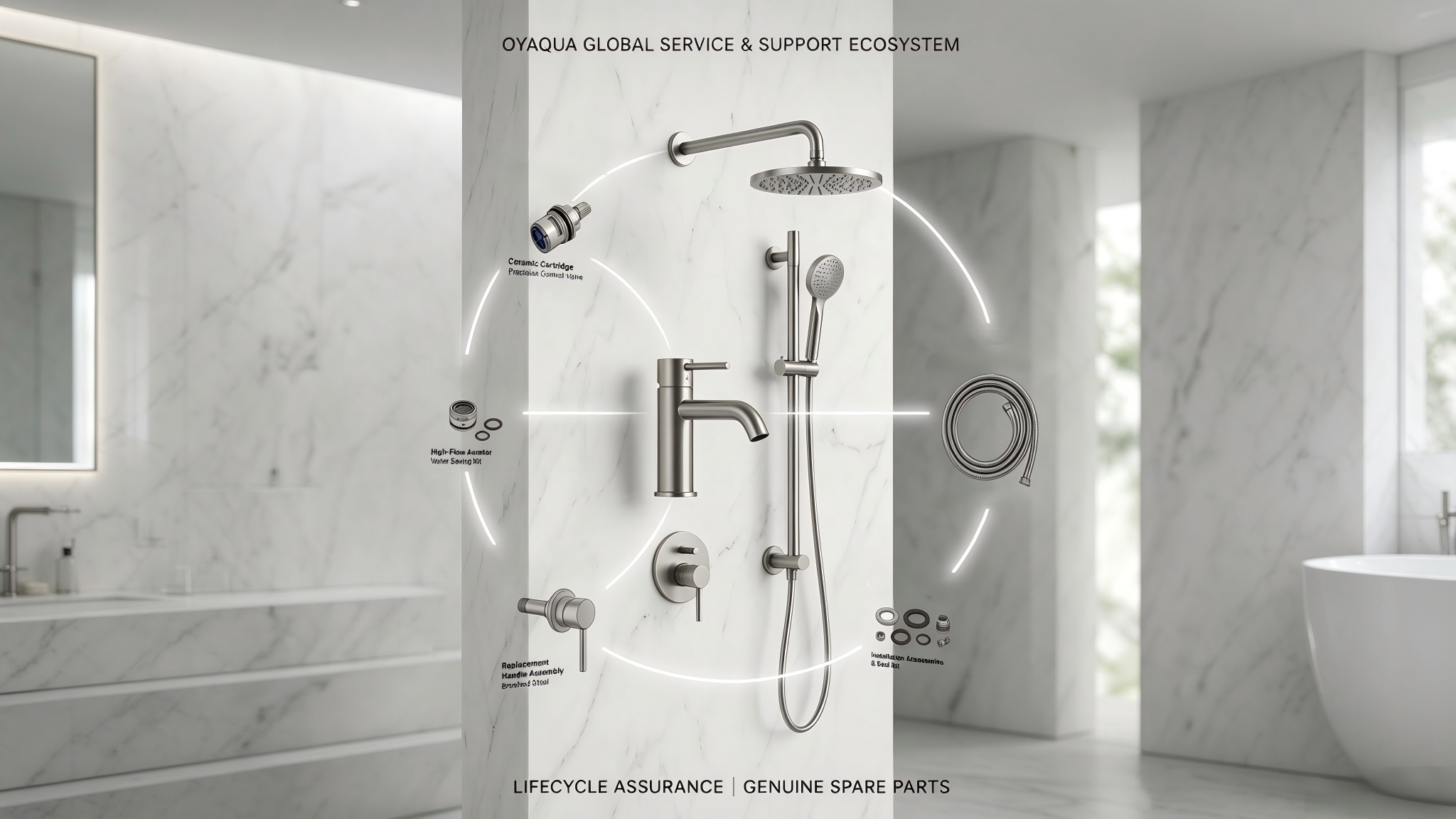
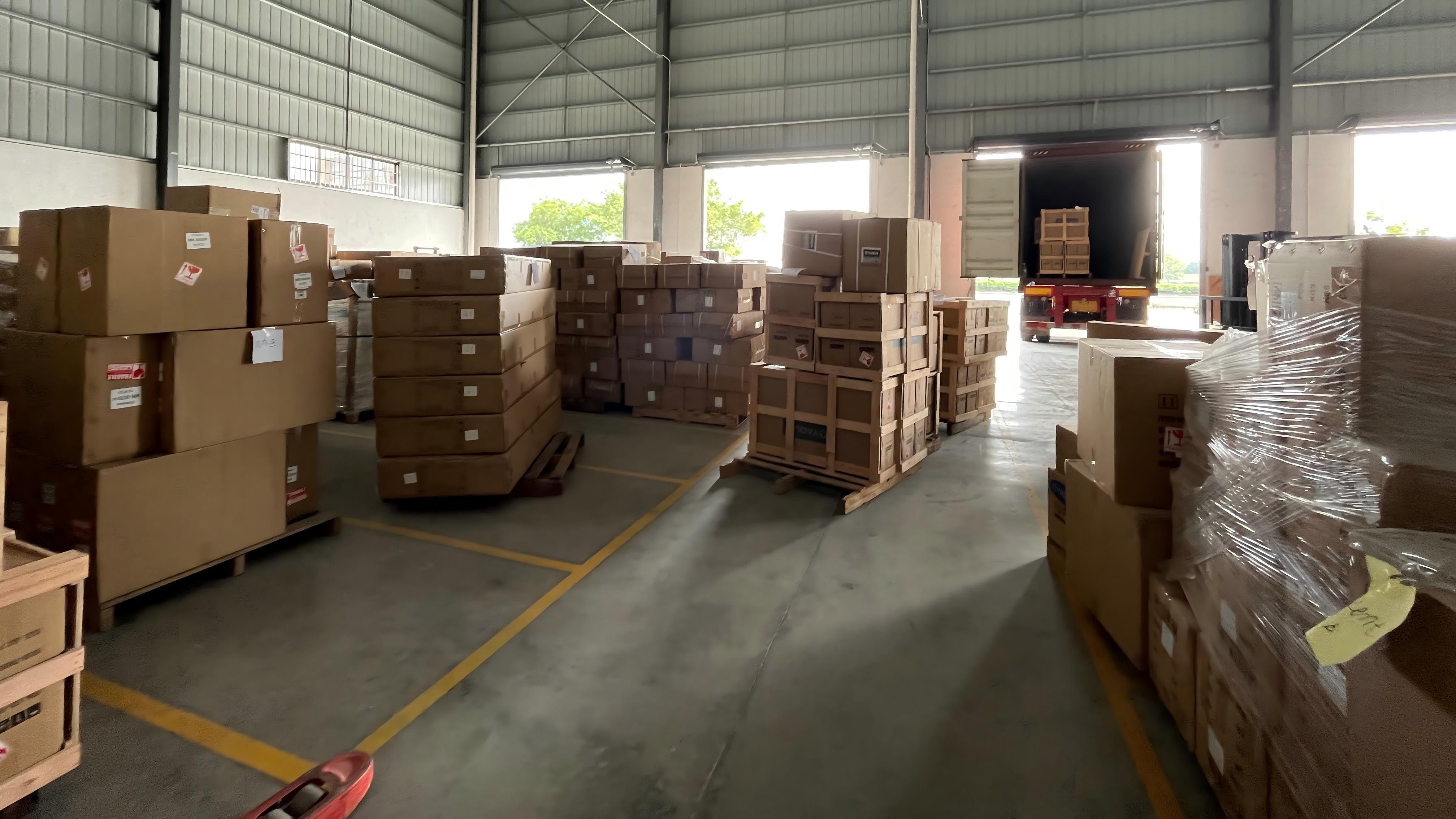
Oyaqua stocks fast-moving spare parts — cartridges, valves, hinges, mirrors and fittings — in its African warehouses, so a claim does not wait on a container from the factory.
Days, Not Weeks
A replacement collected from local stock reaches the site in days. Shipping a single part from overseas typically adds several weeks of freight and clearance time.
One Language, One Time Zone
Your seller speaks the local business language and works in your working hours, which removes most of the back-and-forth delay in a claim.
Project Records in One Place
Buying through one local source keeps the invoice, model list and delivery records together, which is exactly what a warranty assessment needs.
Local spare-parts stock is what turns a warranty promise into a repair that actually happens on schedule.
Before You Buy: Four Things to Confirm in Writing
Who is my warranty contact? Get the seller's name, phone number and the person responsible for after-sales.
What exactly is covered, and for how long? Ask for the warranty card or policy wording for every product line in the order.
How are parts supplied? Confirm which spare parts are held locally and what the lead time is for anything not in stock.
What voids the warranty? Understand the installation, water-quality and cleaning requirements before the first unit is fitted.
Need Warranty Support on a Local Purchase?
Send Oyaqua your invoice, the model code and a short description of the problem. We will confirm the warranty status of your unit, tell you which warehouse holds the required part, and route the claim to the right local contact.