Every Drop, Every Moment.
Bringing Better Water Living to Every African Home. We believe every family deserves access to clean, reliable, and dignified water solutions.
Home / All / Products & Selection / How to Choose Bathroom Vanity Materials: Sintered Stone, Multi-layer Solid Wood, or PVC?

How to Choose Bathroom Vanity Materials: Sintered Stone, Multi-layer Solid Wood, or PVC?

Update Time:2026/10/16

How to Choose Bathroom Vanity Materials: Sintered Stone, Multi-layer Solid Wood, or PVC?

There is no single "best" bathroom vanity material. The right choice depends on how much moisture the cabinet actually faces, your unit budget, and how much maintenance the end user will accept. In short: sintered stone wins on surface performance, multi-layer solid wood wins on warmth and structural stability, and PVC wins on waterproofing and cost.

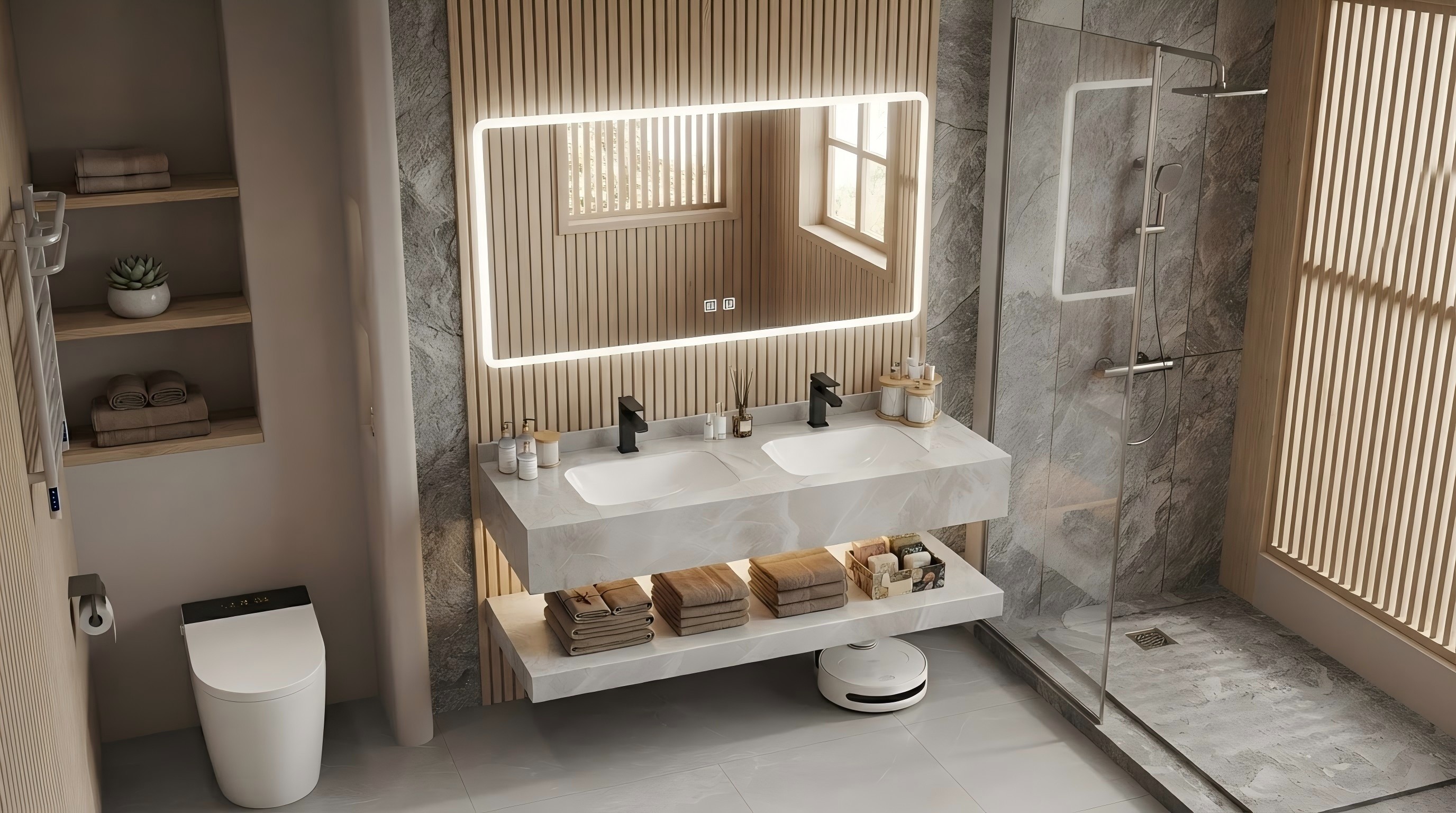
Modern bathroom with a floating vanity cabinet and sintered stone countertop

Quick Answer: Match the Material to the Moisture

  • Sintered stone — Mohs hardness 6–7, water absorption ≤0.05%, heat resistant to around 300°C. Best for 5-star hotels, premium residences and high-traffic washrooms.
  • Multi-layer solid wood — cross-laminated plies resist warping and swelling far better than solid timber. The mainstream choice for mid-to-high-end apartments and villas.
  • PVC — fully waterproof, immune to mould, rot and termites, and roughly 10–15% lighter to ship. Best for rentals, dormitories and tropical or high-humidity regions.

Side-by-Side Comparison

Factor Sintered Stone Multi-layer Solid Wood PVC
Water resistance Excellent, absorption ≤0.05% Very good once all edges are sealed Excellent, 100% waterproof
Surface hardness Mohs 6–7, highly scratch resistant Depends on veneer or lacquer finish Softer, can scuff and scratch
Heat resistance Up to ~300°C with no deformation Moderate, keep hot tools away Low, may distort under sustained heat
Weight & handling Heavy, needs reinforced fixing Medium Light, easiest to install and export
Look & feel Premium stone with marble-like veining Natural wood grain, warm to touch Plastic-like, wide colour range
Maintenance Near zero, never needs sealing Periodic sealing and good ventilation Wipe clean, no sealing
Relative cost High Medium Low to medium
Best for Luxury hotels, premium condos Mid-to-high apartments, villas Rentals, high-density housing, tropics
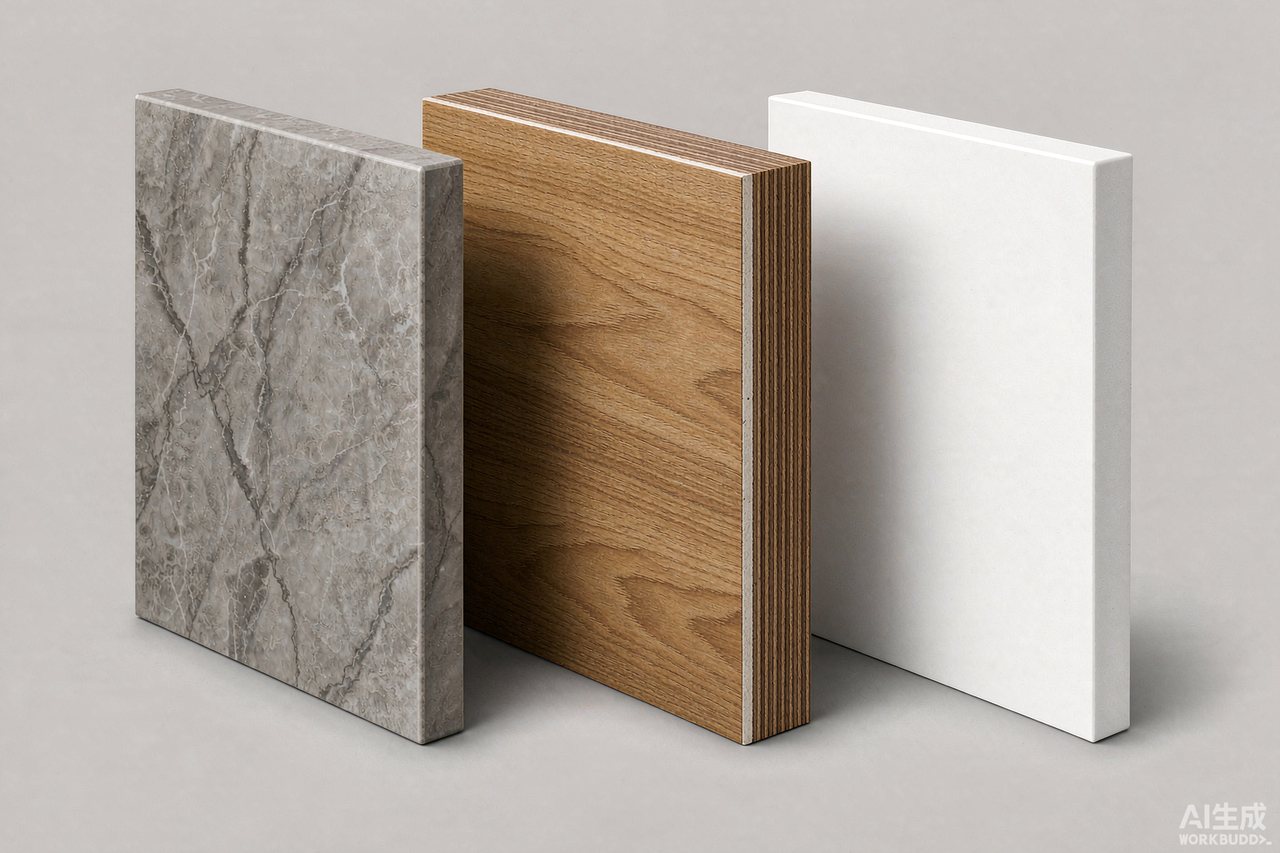
Three bathroom vanity material samples: sintered stone, multi-layer wood and PVC
Compare real samples under your project lighting before you commit to a bulk order.

The Three Materials in Detail

Sintered Stone (Rock Slab)

Choose it when the countertop takes heavy daily abuse and the design brief calls for a luxury stone look. It is fired above 1,200°C, is non-porous, UV stable, and resists acids and household chemicals, so it will not stain or harbour bacteria.

Watch out for brittle edges that can chip during handling or installation, and the cold feel of the surface. It is heavy, so the wall structure and fixings must be specified accordingly.
Multi-layer Solid Wood (Plywood)

Choose it when you want genuine wood warmth with reliable dimensional stability. High-quality 7-layer or 9-layer board with waterproof veneer or HPL finish holds heavy countertops and stays flat through humidity swings.

Watch out for exposed edges. Any unsealed cut is an entry point for water, and the cabinet still needs reasonable ventilation to avoid long-term swelling.

PVC

Choose it when the space is permanently damp or the budget per unit is tight. PVC is integrally formed without joints, immune to mould and termites, easy to clean, and light enough to cut freight cost per container.

Watch out for low-grade board that can warp under high heat or scratch easily, and a lower perceived value in ultra-luxury residential markets.

A 4-Step Checklist Before You Order

  1. 1
    Grade the moisture. No wet-dry separation and poor ventilation → PVC or sealed plywood. Good separation and airflow → all three materials are viable.
  2. 2
    Set the unit budget. Compare landed cost per vanity, including freight weight, not just ex-works price.
  3. 3
    Check the substrate. Sintered stone tops are heavy; confirm the wall can carry the load and specify the right fixings.
  4. 4
    Approve physical samples. Colour drift happens in production runs, so sign off a pre-production sample under the project's actual lighting.

Care Tips That Extend Service Life

  • Wipe standing water off the countertop and joins within 30 minutes.
  • Use pH-neutral cleaners. Avoid hydrofluoric acid, which is the one chemical that damages sintered stone.
  • Re-seal exposed wood edges every 12 to 24 months.
  • Run ventilation for 15 to 20 minutes after each shower.
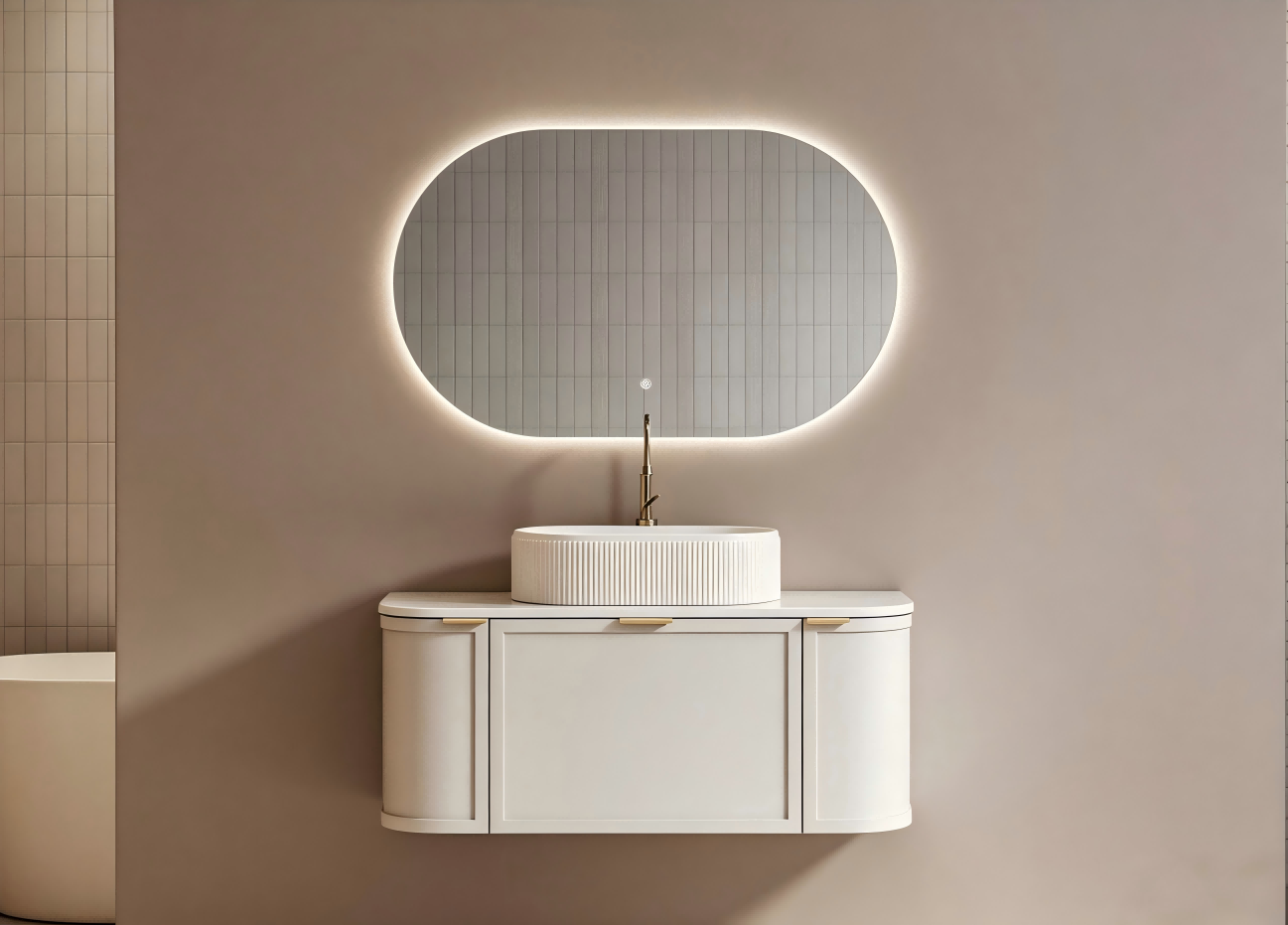
Bright family bathroom with a warm oak multi-layer wood vanity

Not Sure Which One Fits Your Market?

Oyaqua supplies sintered stone, multi-layer solid wood and PVC bathroom vanities to distributors, contractors and hotel groups. Tell us your project type, target unit price and quantity, and our team will send a material recommendation with physical samples and a full quotation.

Request Samples & Quote